We take houses down for developers, GCs, and homeowners around Greater Seattle, then keep going: utilities capped, old septic decommissioned, abatement cleared through licensed subs, structure and debris hauled off, foundation pulled, until the lot grades out ready to build on.
A house coming down looks like the end of something, but on a redevelopment it's the first move. Whatever's left in the ground when the structure is gone, an old foundation, buried debris, a soft or over-dug pad, becomes the condition every trade after you inherits.
A house demolition that stops at "the house is gone" and one that hands back a clean, graded lot are two different jobs, and only one of them keeps the schedule behind it honest. We run the second kind. The lot we leave is measured against what the grading crew, the utility crew, and the new foundation actually need to start.

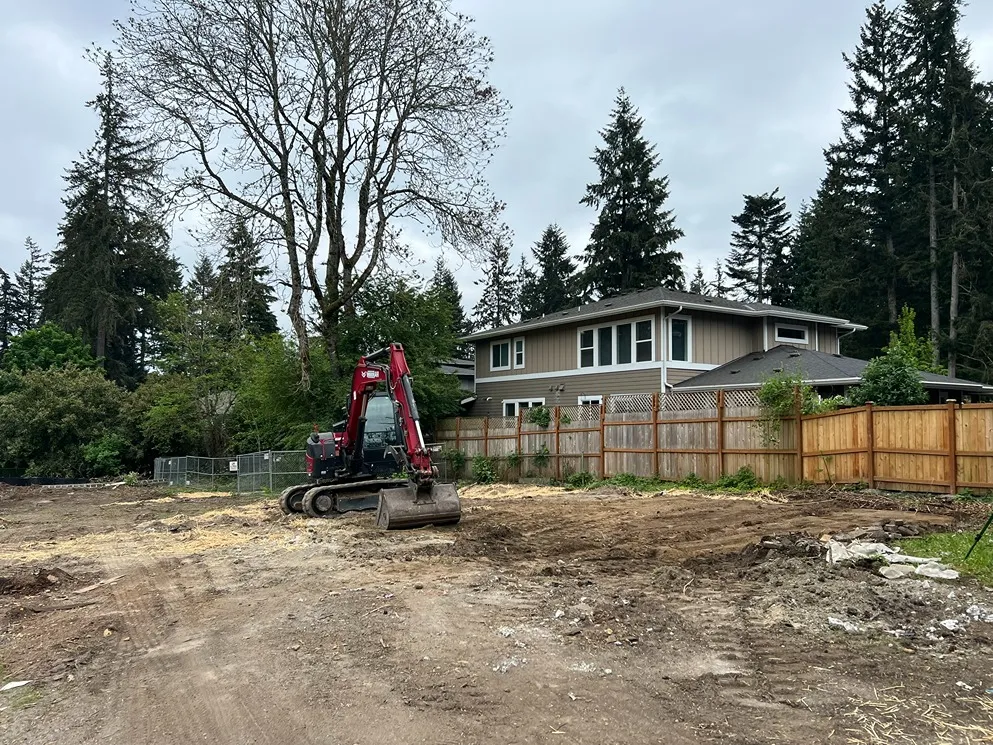
The lot we leave is the starting condition for grading, utilities, and the new footings
Old foundations and buried debris pulled out, not covered over for the next crew to hit
Erosion control set and a clean grade left, so the site is ready for what's staged behind it
Track Record
Residential structures demolished across the Greater Seattle area.
.webp)
.webp)

.webp)

A house demolition runs a repeatable set of work, though where it starts and stops shifts with the structure and the plan:
Permitting support. Coordinating the demolition permit with the jurisdiction so the job starts on solid legal footing.
Utility disconnect coordination. Getting water, sewer, gas, and power capped, abandoned, or disconnected before anything moves.
Septic decommissioning. Old or abandoned septic tanks pumped out and decommissioned to jurisdiction requirements before the lot gets cleared.
Asbestos abatement coordination. Bringing in licensed abatement subs and taking the structure down only after the property clears.
Structure demolition. Dropping the house, including foundations, flatwork, and any outbuildings written into the scope.
Debris hauling and disposal. Loading out and disposing of everything the teardown produces.
Foundation and basement work. Full foundation removal, basement backfill, structural fill, and compaction where the plan calls for it.
Erosion and sediment control. TESC and BMPs set as soil gets exposed and maintained through the job.
Rough and finish grading. Bringing the lot to a clean, buildable grade for the next phase.
This is CSI MasterFormat Division 31 demolition and site clearing, with the utility disconnects reaching into Division 33. Putting the scope in the terms your estimators and spec writers already use keeps the bid legible when it lands in the package with everything else.
No two lots come down exactly alike, but the sequence holds from first look to final grade.
SEE OUR FULL PROCESS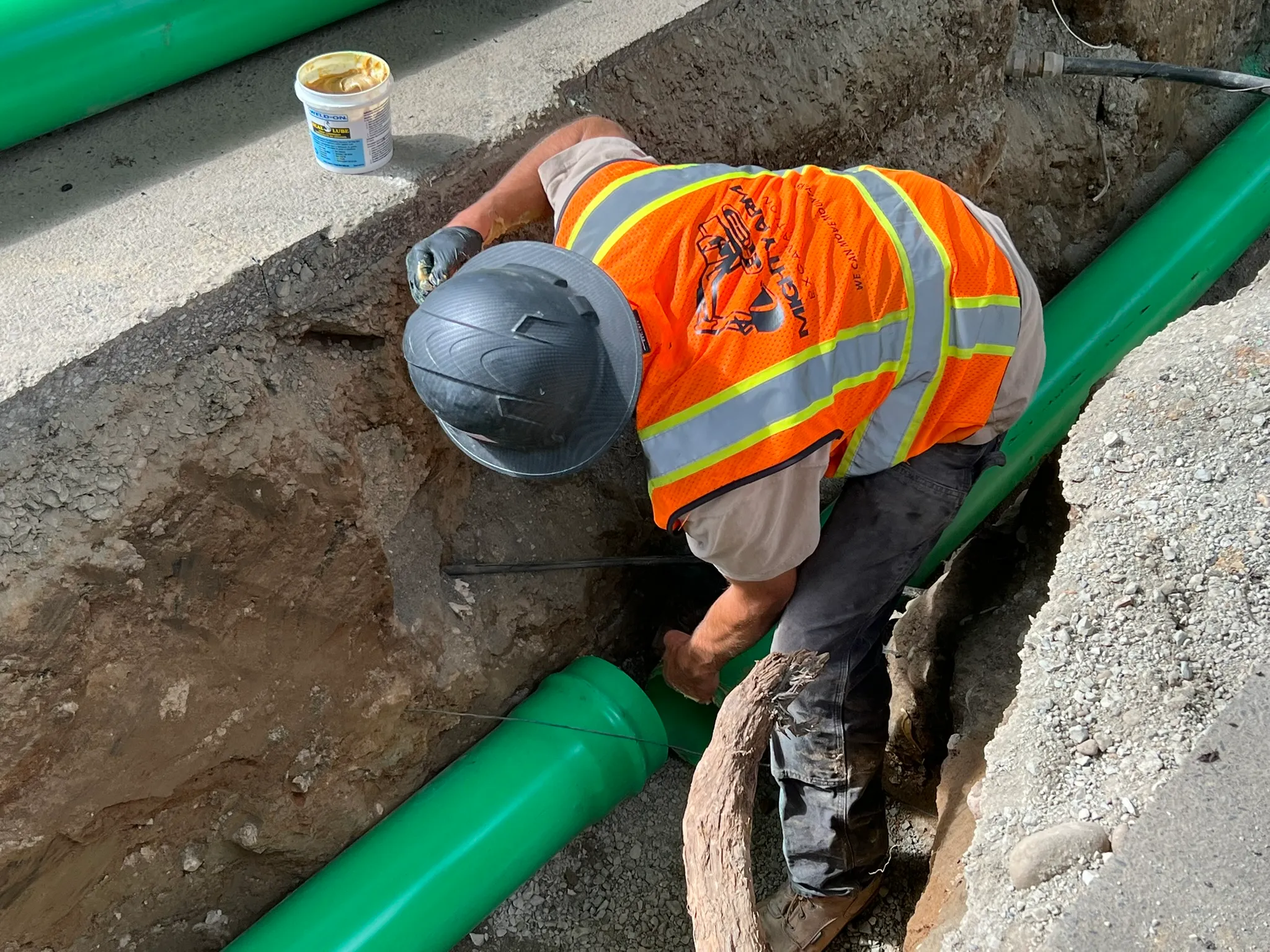
We start with the plans, the permit requirements, and any survey or geotech notes the GC or owner hands over, then walk the property to confirm what comes out and how far the site prep runs. Responsibilities get settled before a machine shows up.
We coordinate the demolition permit, confirm water, sewer, gas, and power are dead, decommission any septic on the property, and schedule any asbestos or lead abatement through licensed subs. Nothing structural moves until the site is legal and cleared.
Crew and equipment land on the agreed date. We take the structure down, then load out and dispose of the debris rather than leaving it staged for someone else to move.
We pull or backfill the foundation as the plan directs, bring the lot to grade, and walk it with the owner or GC to confirm the site is clean, cleared to spec, and ready for what's lined up next.
.webp)
No machine touches the structure until the utilities are dead, the abatement sub has signed off, and the permit's in hand. Coordinating that across providers, the licensed crew, and the jurisdiction is where a demo starts clean instead of becoming a liability.

Fixed-price, line items, assumptions and exclusions spelled out, mapped to CSI Division 31 so it reads into a GC package. As residential demolition contractors we're non-union, SAM.gov-registered, and prevailing-wage ready, so public and municipal demolition is on the table.

Most outfits drop the house and leave the lot for you to hire out. We self-perform the earthwork, so the same crew pulls the foundation and grades to what the next build needs.
.webp)
These teardowns sit on tight lots, with property lines, neighbors, and trees that stay put. We plan the access and take the house down without touching what's marked for retention.
A house demolition goes sideways at the front end or the finish, rarely in the middle. Get the utilities, the abatement, and the grade right and the teardown is the easy part.
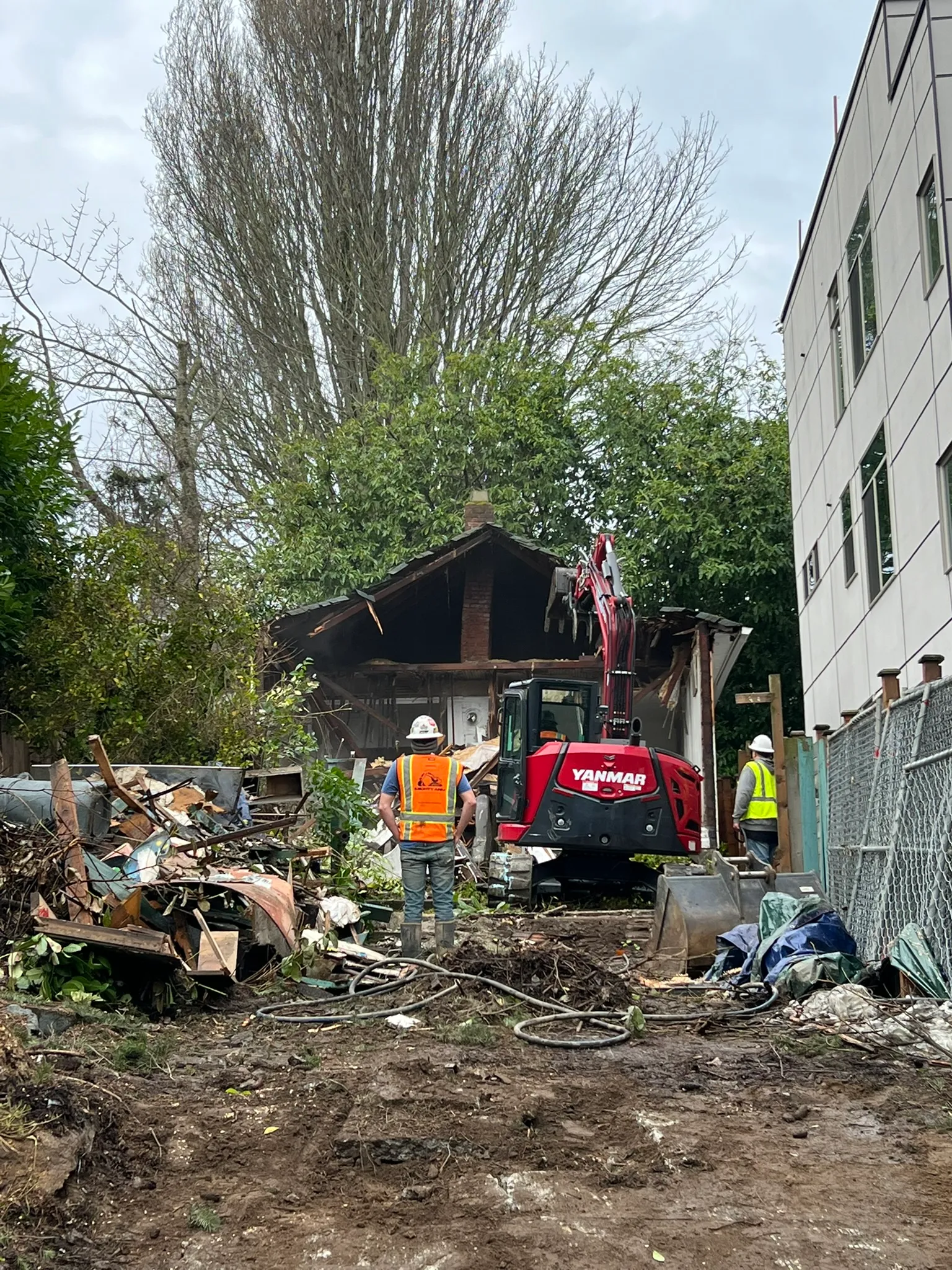
Plenty of the homes coming down around Seattle went up before asbestos and lead were regulated out, and none of it can be in the structure when a machine hits it. It gets found and cleared first, or the job stops.
We don't self-perform abatement and won't touch the structure until it's cleared. Carrying that coordination is how we keep the front end of a house demolition compliant and the liability off your project, instead of leaving you to line it up separately.
Once the walls are down, the foundation is what's left, and it decides whether the next build sits on solid ground. Leaving an old one in place saves a day now and costs more later when it fouls the new footings or settles under load.
We settle the foundation question before demo, not in the field, since it changes the scope, the disposal, and the grade we leave. Our crew grades the lot next, so we'd rather take the concrete out fully than work around it later.
Some jobs stop the moment the structure and foundation are gone. Others run through to graded, permitted ground the next trade can start on. How far a house demolition runs depends on what the next crew needs to start.
For a developer clearing several lots, the sequencing matters as much as the teardown. We set the order so home demolition on one lot doesn't hold up grading on the next, which is where redevelopment work differs from a one-off residential job.
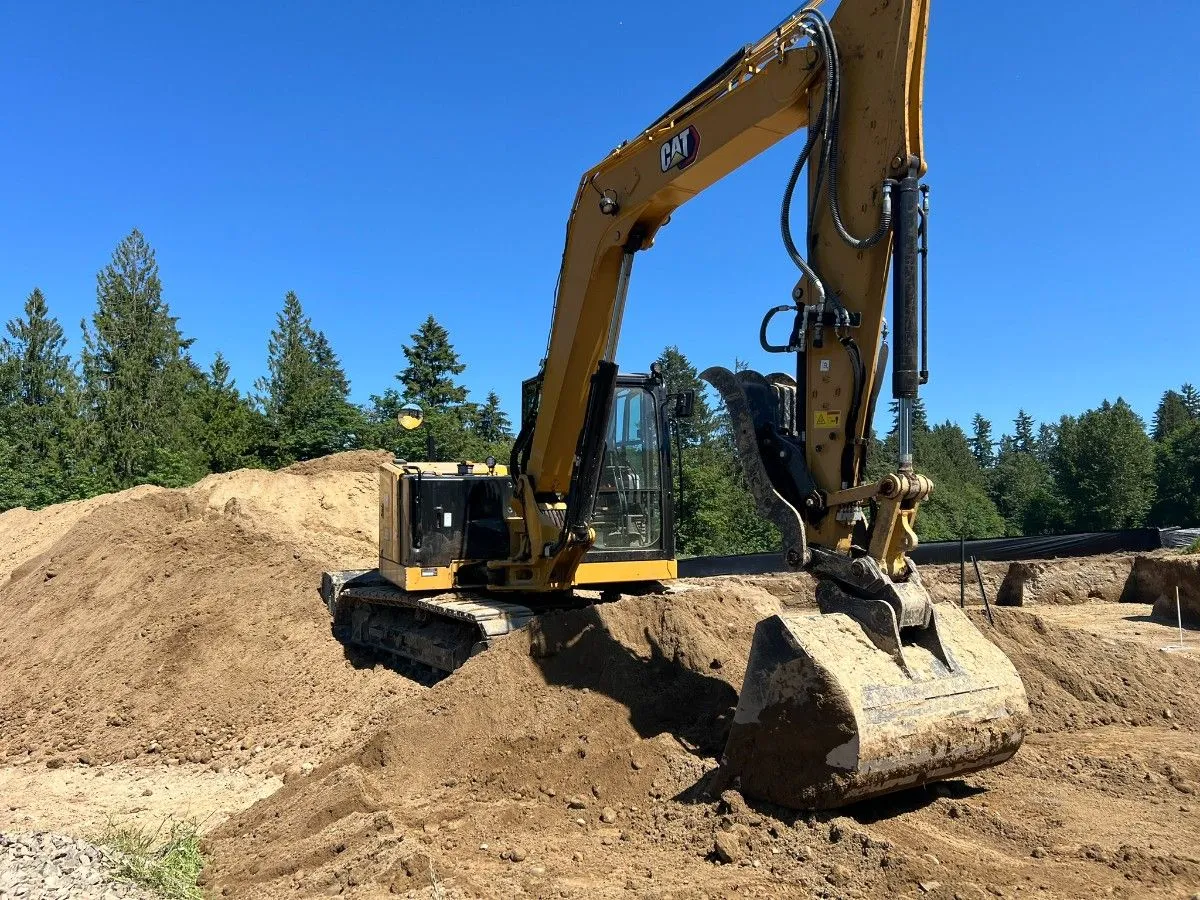
A teardown means getting equipment and haul trucks onto the lot and the structure back off it, so where the site sits is part of the number. Mighty Arm covers a 50 to 70 mile band around Seattle, reaching south to Tacoma, north to Bellingham, and east to North Bend.
Seattle
Bellevue
Tacoma
Everett
Lynnwood
Bellingham
Granite Falls
North Bend

Home base & primary coverage

We coordinate that with the providers. Water, sewer, gas, and power all have to be capped, disconnected, or abandoned before a structure comes down, and we confirm every one is handled with the project team before demo starts.
We decommission it. Older residential lots around Seattle often still have a septic tank in the ground, and it has to be pumped and properly decommissioned before the site's cleared. We confirm the health-district permit and inspection requirements for the jurisdiction as part of the proposal.
On older homes, almost always. Asbestos and lead show up regularly in PNW houses built before those materials were regulated out, and anything found has to be cleared by a licensed abatement sub before demolition begins.
It is. Loading out and disposing of everything the teardown produces is part of the scope, so the debris leaves with us instead of becoming a staging problem for the next phase.
Both, and how far it goes follows the plan. We can pull the full foundation and flatwork out, backfill a basement with compacted structural fill, or leave a foundation in place where your engineer and the jurisdiction sign off on it.
The demolition itself usually runs one to several days, depending on the size of the structure and the site. Counting permits, utility caps, abatement, and site prep, the full job can span a few weeks to a couple of months on a more complex property.
By the lot, not a rate card. Structure size and type, foundation scope, hazardous material, site access, and how far the site prep runs all move the number. You get a fixed-price proposal with line items and exclusions written out, so send the address and plans and we'll put a real figure together.
We do. Mighty Arm is registered in SAM.gov and set up for prevailing-wage work, which covers most publicly funded demolition. The extra paperwork keeps a lot of contractors out of that lane, and it's one we're set up to run.
Workmanship carries a one-year warranty from substantial completion, and manufacturer warranties on any supplied materials pass through to you. It doesn't cover damage caused by others, settlement past normal tolerances, misuse, or a change in how the site gets used.
Send us the address, plans, and site details and we'll get back to you with a proposal covering the demolition, pricing, and timeline.
Tell us about the property and attach plans if you have them. We'll follow up to confirm the scope, timeline, and pricing.

Commercial excavation, site prep, and demolition for general contractors and developers across Greater Seattle.
License: MIGHTAE766QK
UBI: 605-632-469


.webp)