Mighty Arm Excavation (WA license MIGHTAE766QK) is a licensed, bonded, and insured sitework subcontractor handling soil management for Greater Seattle GCs and developers. We cover fill import and export, wet native soils, stabilization, and hauling, priced from your geotech report and warranted one year from substantial completion.
Soil management is the part of our earthwork scope that settles the dirt balance: how much native material stays, how much leaves, and what has to come in to replace it. Mighty Arm carries that from topsoil stripping at the start of site preparation through hauling, fill placement, compaction, and the density results the geotech needs for sign-off.
The geotech report sets the rules for that work, from which native soils can go back in to the lift thickness and compaction the fill has to reach. We bid to WSDOT standard specifications, project specs, or both, and we schedule testing with the third-party lab so results are on record for the GC.

Material certifications and gradation reports provided for imported fill
Density results documented and handed to the GC
Scopes that map to CSI Division 31: 31 23 23 Fill and 31 32 00 Soil Stabilization
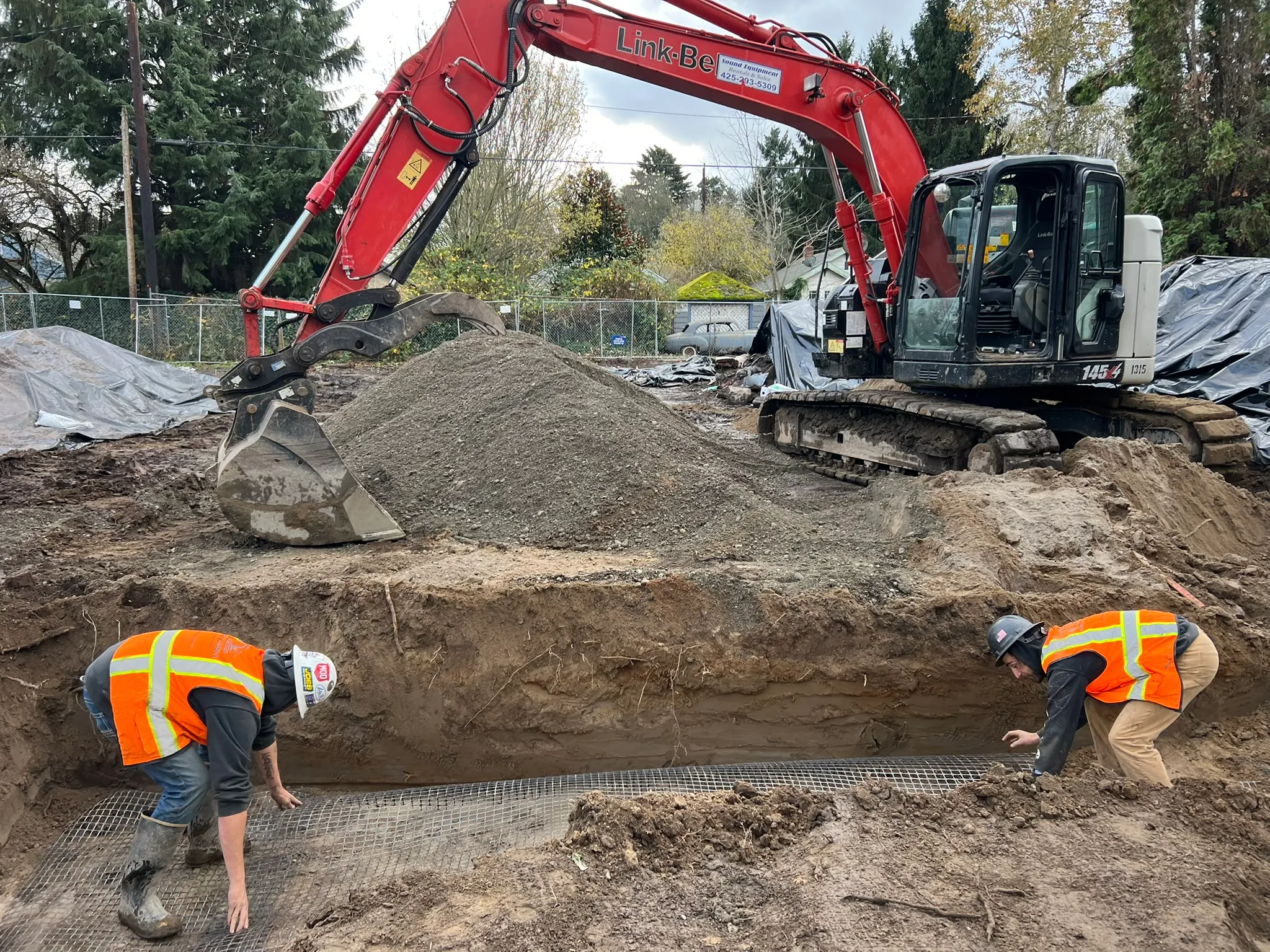


From the balance analysis to the last load hauled off, these are the pieces of soil work we bid and manage for GCs and developers.

Earthwork takeoff and balance analysis showing how much native material can stay and what has to be exported or imported.

Soil disposal at receiving sites, permitted landfills, and recycling facilities, with excess sent to projects needing import.

Gravel, select, and common borrow, crushed surfacing base course, pit run, sand, and recycled concrete aggregate to spec.
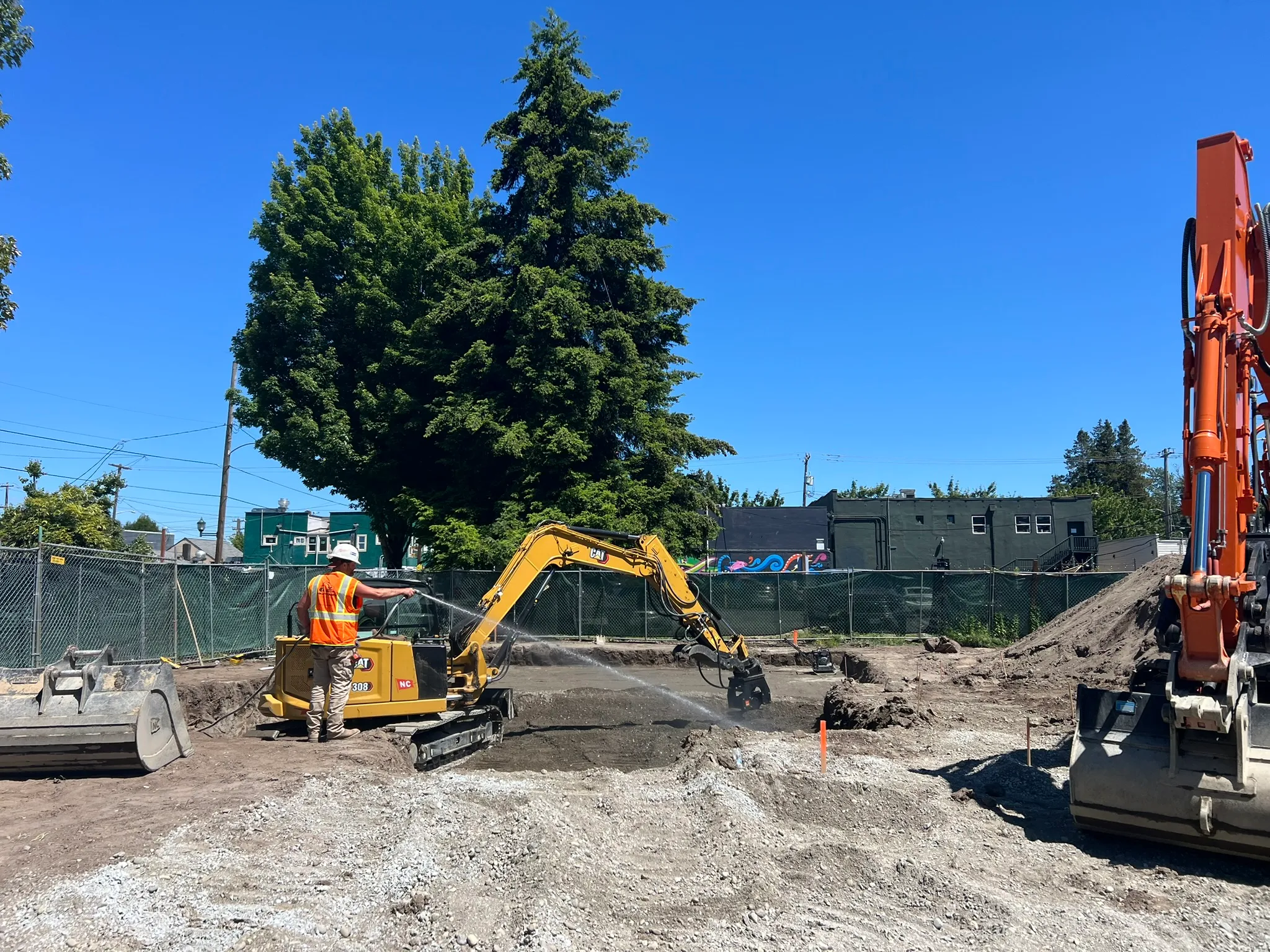
Aeration and drying, discing and turning, or chemical amendment to bring wet native soil back to a condition that compacts.
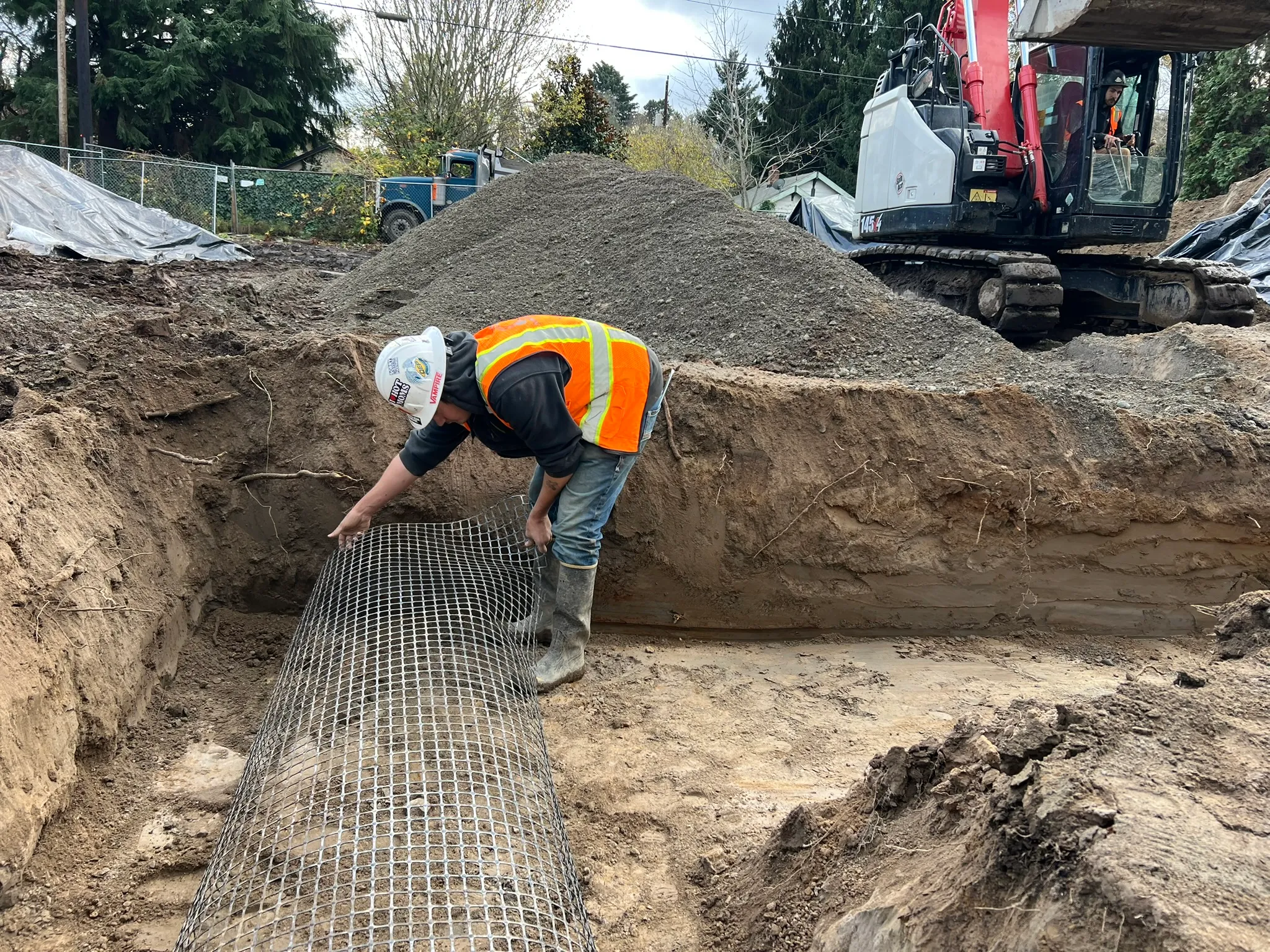
Our soil stabilization services include cement amendment, geotextile fabric, geogrid, and rock spall bridging on soft ground.
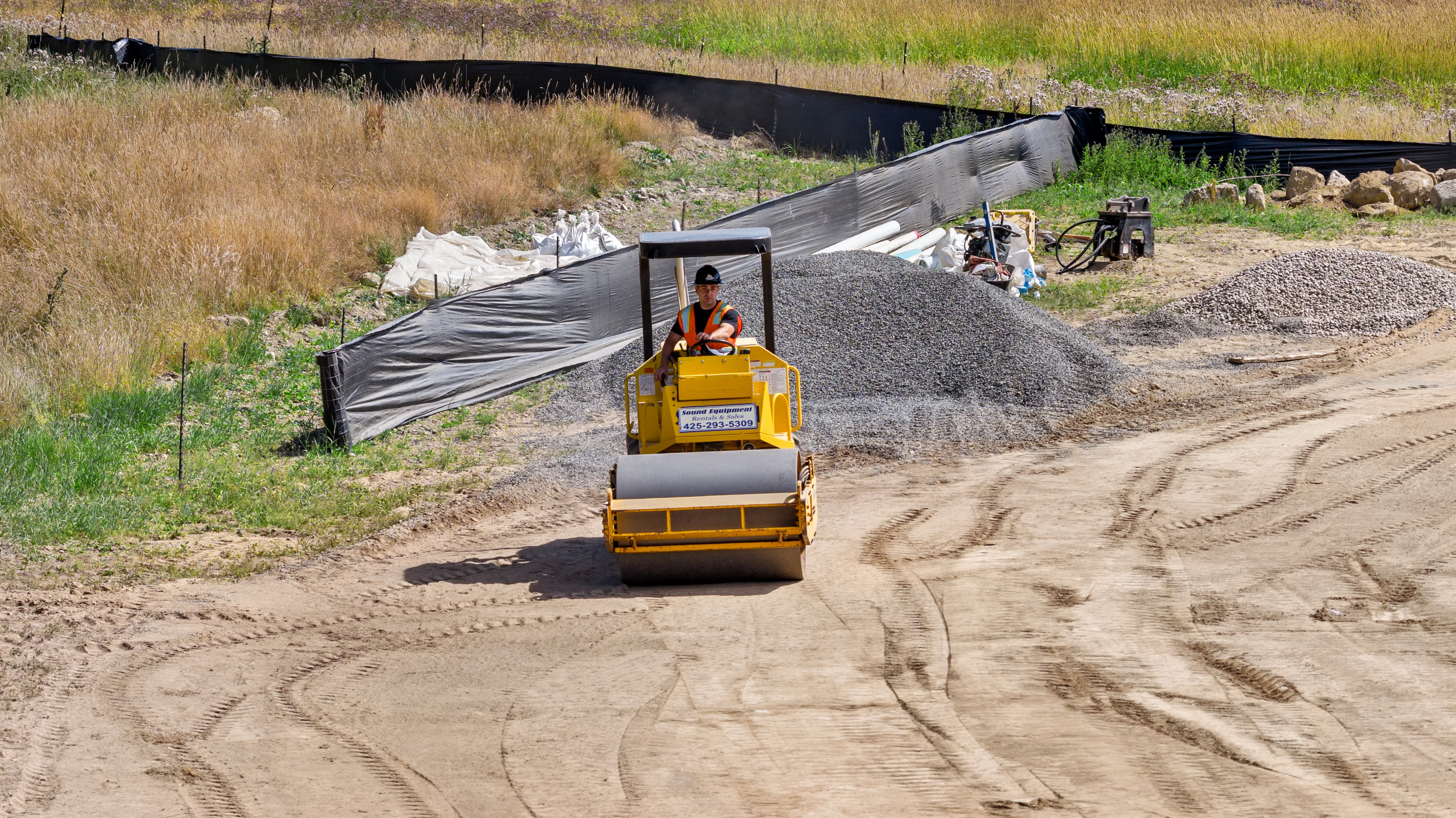
Proof rolls run as a step in our execution workflow, alongside fill placement, compaction, and density testing coordination.

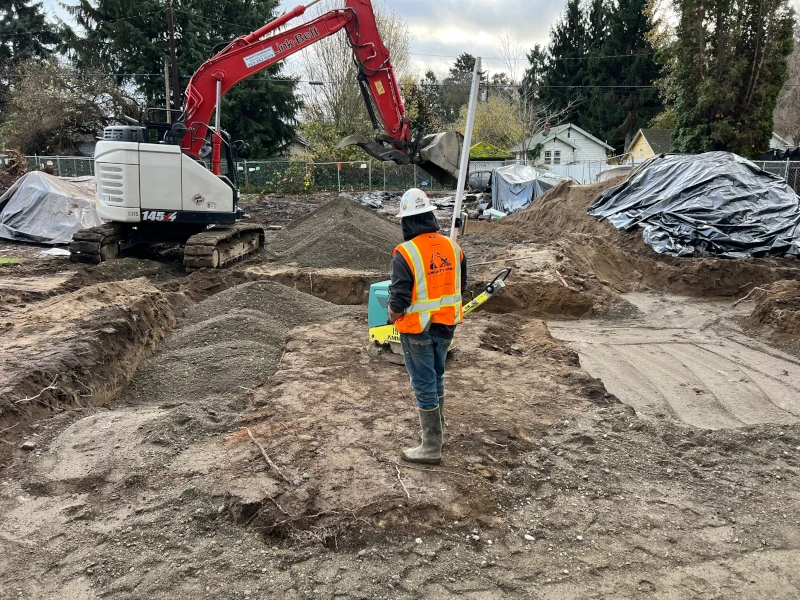
Fill compacted in controlled lifts to the density the geotech report specifies, with third-party lab testing scheduled by us.

Dirt hauling on our own trucks and contracted haulers, scaled to the volume, with haul route approvals and street cleaning.
We price soil work from the geotech report and a balance analysis, then run the excavation, placement, and compaction with our own equipment and operators. Assumptions and exclusions are written into the proposal, so your estimator can see what the number covers.
Track Record
Projects completed across all Mighty Arm services in the greater Seattle area, King County, and Puget Sound region.

Placement planned around the rain, with native reuse weighed before soil is hauled off.
Own iron on excavation, placement, and compaction, plus contracted haulers for volume.

Relationships with clean fill sites help cut disposal cost on export-heavy jobs.

Workmanship backed one year from substantial completion, exclusions stated in writing.
Four stages carry the work from preconstruction review to a documented handoff to the GC.
SEE OUR FULL PROCESS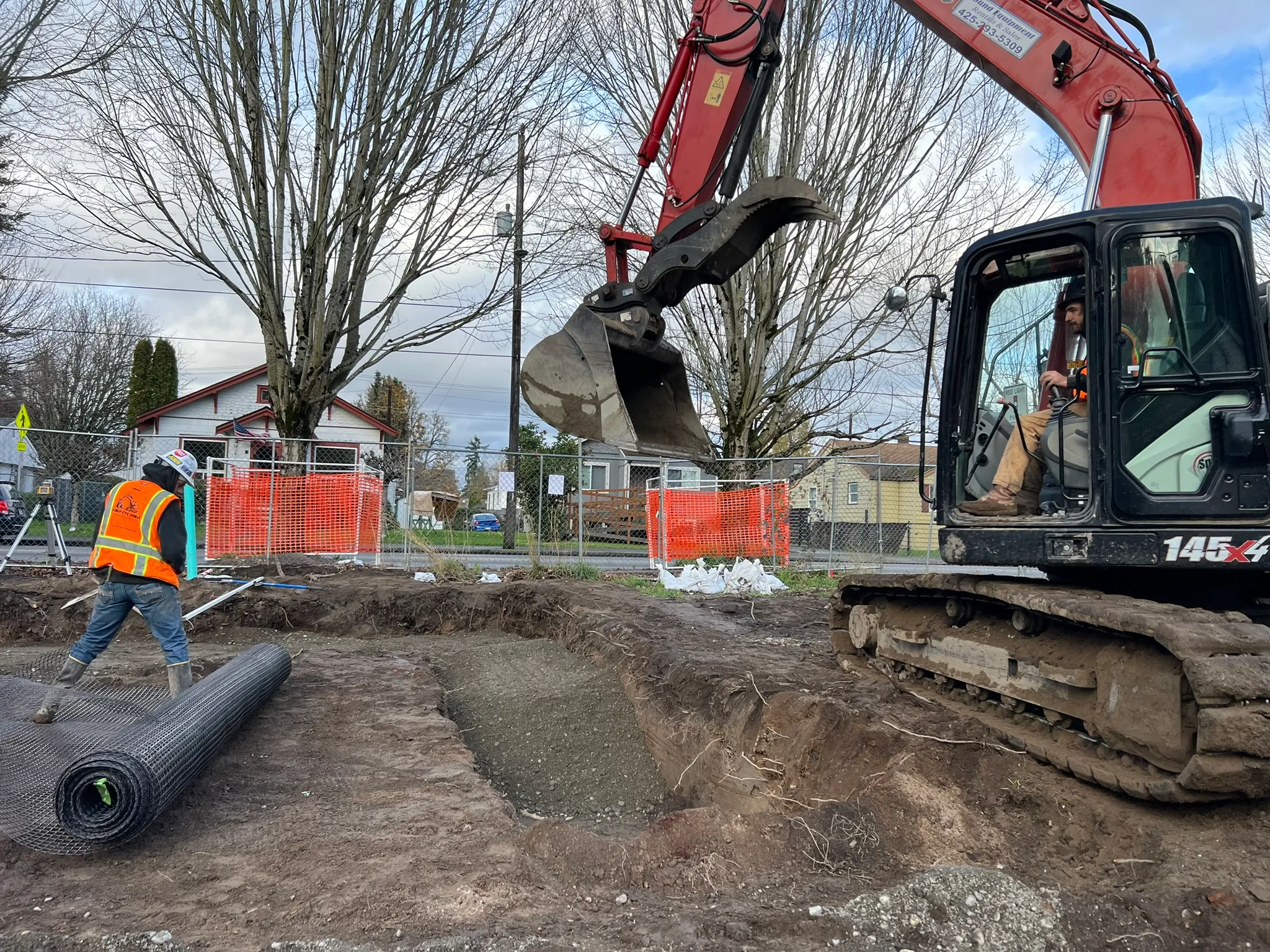
We review the geotech report, run the earthwork takeoff and balance analysis, and identify import and export volumes and their cost early.
We source and price import material, usually from the pit nearest the project to keep trucking cost down, and flag soil risks before award.
Topsoil is stripped and stockpiled, material is excavated and hauled, wet soil is conditioned as needed, and fill goes in controlled lifts and is compacted to spec ahead of a proof roll.
We schedule density testing with the third-party lab, coordinate the geotech's sign-off, and hand the GC a documentation package with the results.
The real test of a sub is whether a GC calls you for the next job. Here's what the contractors and developers we work with have to say.

From 220+ Google reviews
Our crews work within a 50 to 70 mile radius of Seattle, from Tacoma north to Bellingham and east to North Bend, with King County as home base and primary coverage. Inside that range, haul distance and route are factored into the soil price.
Seattle
Bellevue
Tacoma
Everett
Lynnwood
Bellingham
Granite Falls
North Bend


Home base & primary coverage
We bid fill to the WSDOT Standard Specifications, project-specific specs, or both.
Section numbers can shift between editions, so confirm current rules with WSDOT. We also place:
A third-party lab performs compaction testing, and we coordinate the lab's schedule with our placement.
Fill can go in during February, as long as placement is coordinated around the weather so rain doesn't affect it.
Wet weather can turn a reuse plan into paying twice: once to haul out and dispose of native soil too muddy to compact, and again to import and place new fill.
Native soil reuse is our first choice wherever the geotech report allows it.
Where subgrade is too soft to carry fill, we stabilize it to the geotech's recommendations with:
On a 22-home site development in Seattle, unstable native soils called for a two-foot over-dig below the foundations, biaxial geogrid, and imported fill, with the geotech on site throughout.
Export goes to one of four destinations:
On export-heavy projects, those relationships reduce disposal cost.
Unsuitable soil is the most common reason we see earthwork budgets break: when material turns out unfit to reuse, trucking and disposal add up quickly. Before we bid, soil from the cut in our excavation work is checked for reuse against the geotech report.
If suspect material turns up mid-excavation, we notify the owner or GC and advise on the possible next steps. Depending on the material:
Contaminated soil disposal runs through a special processing facility rather than a standard receiving site. That puts it outside the soil assumptions written into the proposal, and it's priced on its own once the material is characterized.
Buried hazards can sit outside the soil too: on a side sewer connection on Mercer Island, the crew encountered an existing asbestos pipe mid-project, and the owner was kept informed while the scope expanded to handle it.
Soil management on our sites runs under the project safety plan, with dust control and stockpile stability built into the work.
Soil management is priced per project from your plans, specs, and geotech report, so the bid reflects the volumes and haul your site actually carries. Yardage is bid on loose cubic yards (LCY).
Depending on the project, pricing can be:
Material can be billed at cost plus markup, dump fees can pass through, and a unit price schedule can cover quantities beyond the bid.
Terms are set per contract. Progress billing and Net 30 or Net 60 terms are available, and we provide certified payroll on prevailing wage work.
Our soil management scopes run on:
A dedicated earthwork team runs the work. Its operators are experienced in moisture-sensitive soils and cross-trained with our grading crew.
Answers to what contractors and developers most often ask before bringing us onto a project.

Mighty Arm prices soil work per project from your plans, specs, and geotech report. The price depends on volume, haul distance and route, dump fees and disposal site, material type and source, the moisture condition of the native soil, season, site access, compaction spec, testing requirements, and any contamination.
Mighty Arm bids soil quantities on loose cubic yards (LCY). Bank, loose, and compacted yards measure the same material at different volumes, so stating the basis keeps competing bids comparable.
Mighty Arm sets the schedule in each proposal, based on volume, haul distance, the season, and testing requirements.
Export volume comes out of the earthwork takeoff and balance analysis Mighty Arm runs in preconstruction, checked against what the geotech report says can be reused. Bringing us in at the start of preconstruction identifies import and export volumes, and their cost, before the budget is set.
Mighty Arm works through the wet season by coordinating fill placement so rain doesn't affect it. The added cost comes when native soil meant for reuse gets wet and can no longer be compacted, because it then has to be exported, disposed of, and replaced with imported fill.
Mighty Arm notifies the owner or GC and advises on next steps, working with environmental consultants and referring the material to a specialist where needed. Contaminated material goes to a special processing facility instead of a standard receiving site, so it's handled and priced outside the soil assumptions in the proposal.
Mighty Arm stops and brings its findings to the GC when soil conditions vary sharply from the geotech report, and the GC decides the next step, which may include having the geotech examine the site again. It's rare, but borings and test pits sample scattered points, so the soil between them can differ.
Bring Mighty Arm in at the beginning of preconstruction. That's when the dirt balance, import and export volumes, material sources, and soil risks can still be priced and planned before award.
Mighty Arm warrants its workmanship for one year from substantial completion and reworks compaction that fails because of its placement, with density results documented at handoff. Manufacturer warranties on supplied materials pass through to the owner, and the warranty excludes damage caused by others, settlement beyond normal tolerances, misuse, and changes in site use.
A Mighty Arm estimator builds the proposal from your plans, geotech report, and schedule, with import and export volumes priced in.
Give us the basics and a quick description of the scope. We'll take it from there.

Commercial excavation, site prep, and demolition for general contractors and developers across Greater Seattle.
License: MIGHTAE766QK
UBI: 605-632-469


