Mass excavation, grading, structural fill, and pad prep executed to your civil plans and geotech report, so the ground is right before the next trade shows up. Serving general contractors and developers across the Greater Seattle area.
Earthwork is the work of moving, placing, and compacting soil until the site matches what the civil drawings call for, from the first cut through to a finished, load-bearing subgrade.
Every scope is built around the project's plans, specifications, and geotechnical requirements. What the soil will carry, how deep the fill goes, and what the subgrade needs all come off the geotech report before we put a number on the work.
Most of our earthwork happens before foundations and vertical construction begin. As your grading contractor on the job, we bring the site to plan grade so the trades lined up behind us can start on schedule.

Full scope from mass excavation through finish grade
Executed to your civil plans, specs, and geotech report
Coordinated with your engineers, inspectors, and testing agencies
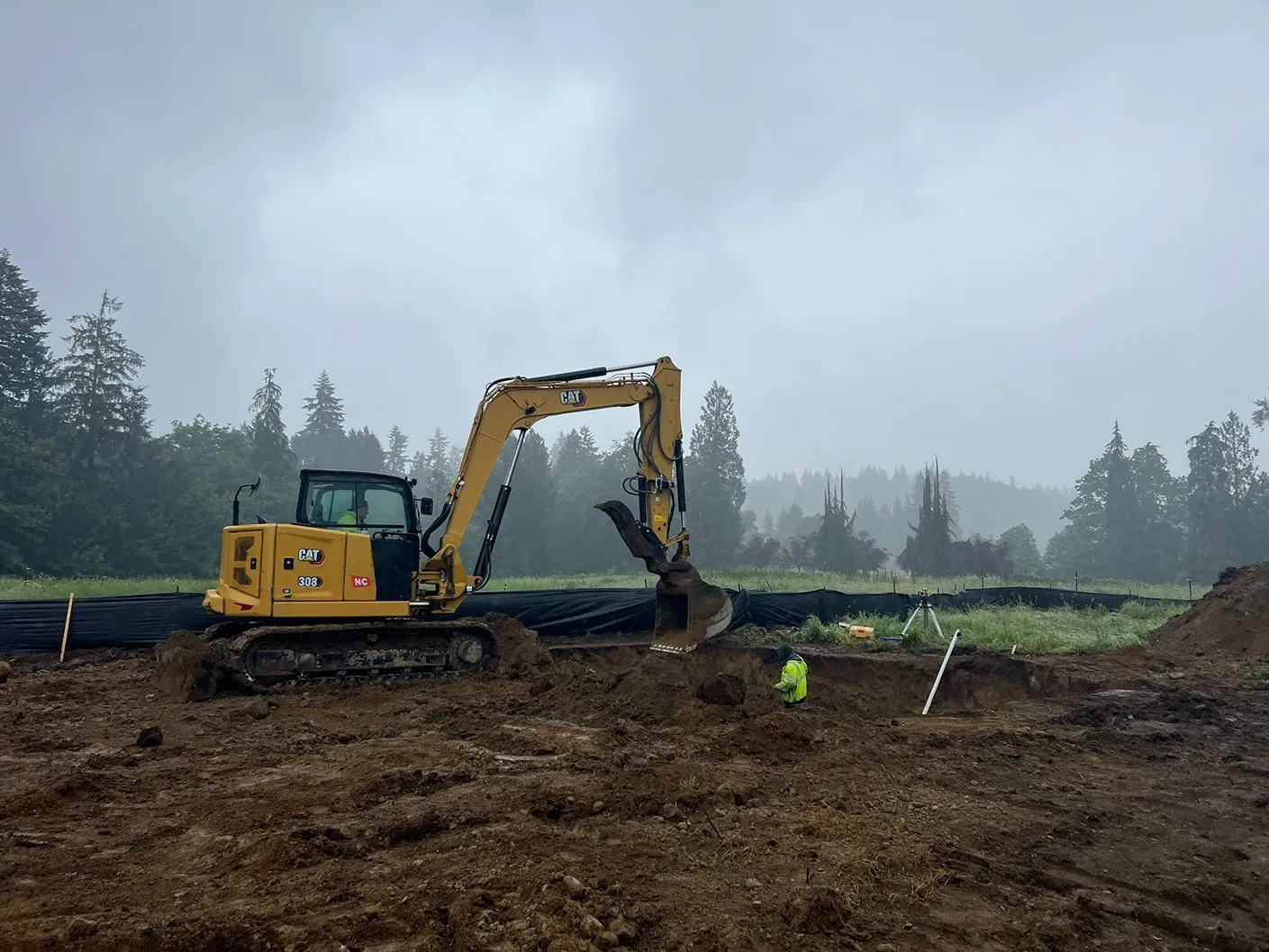

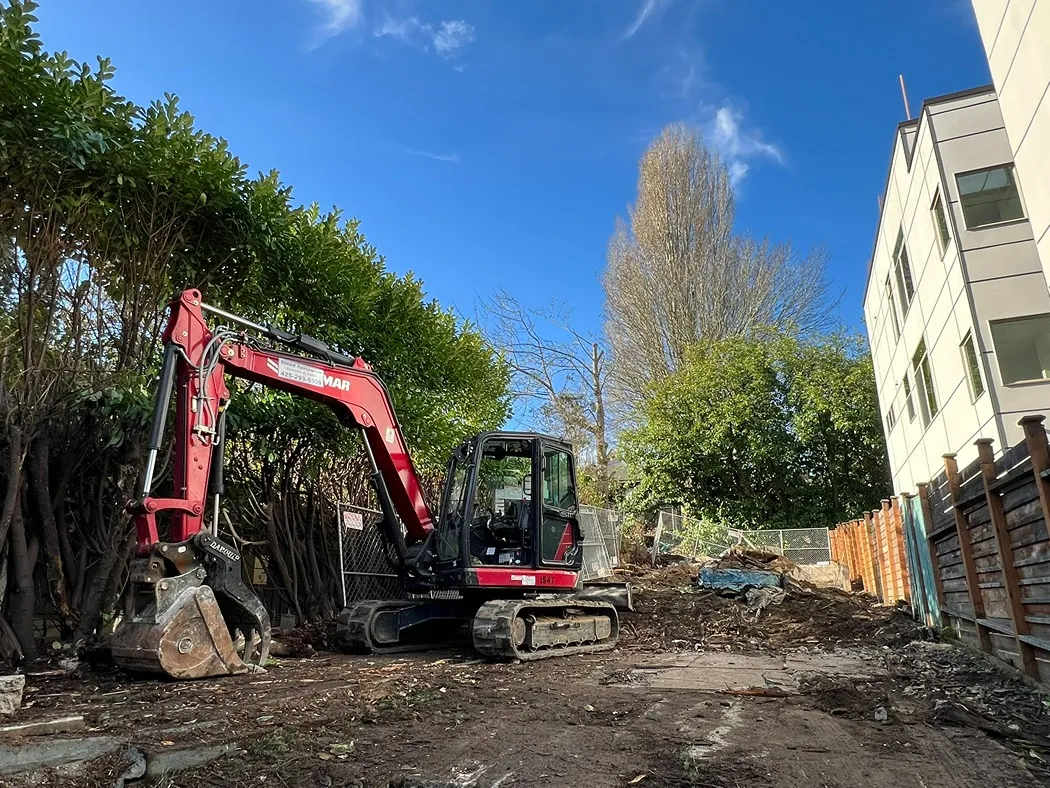
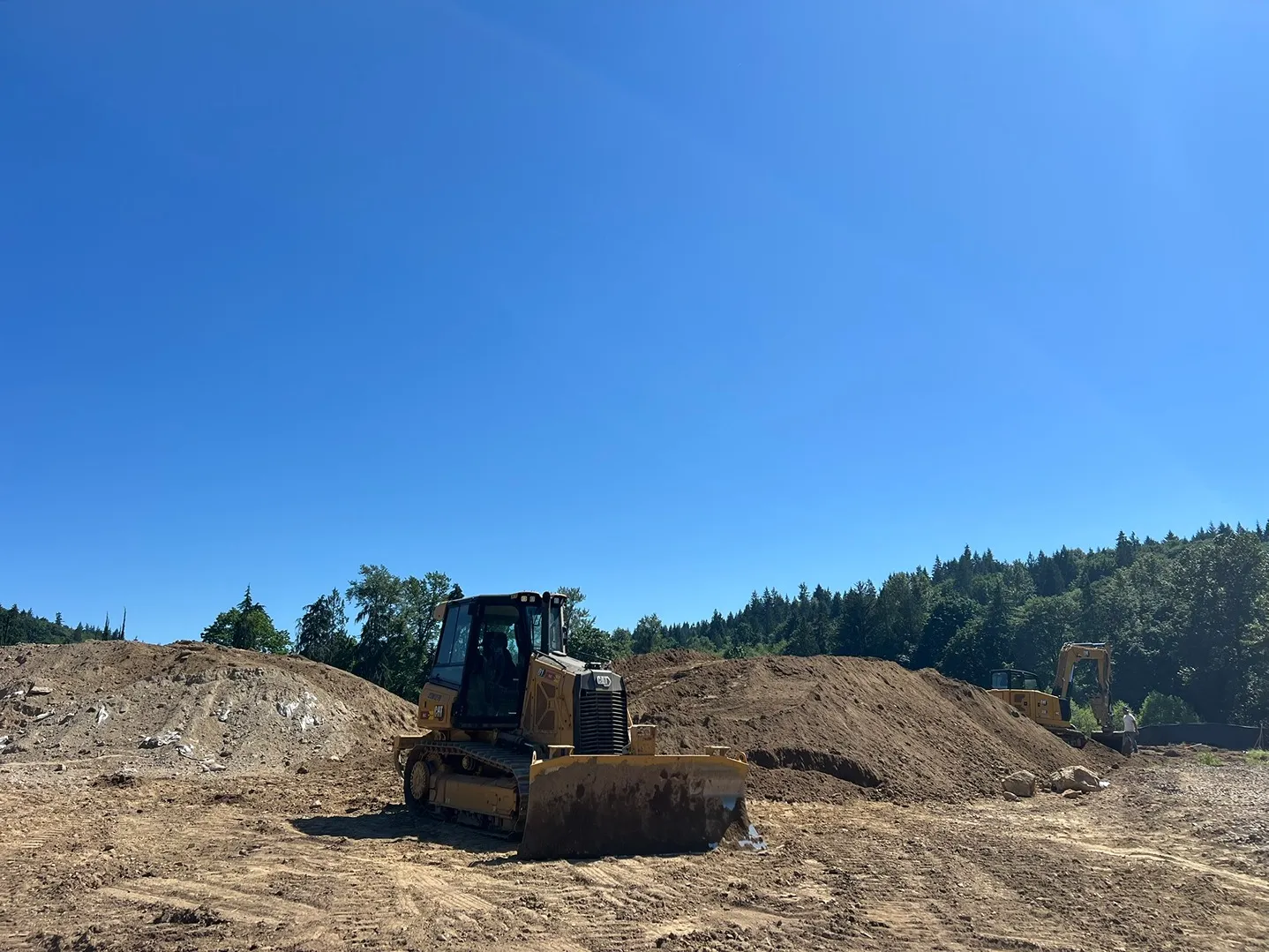
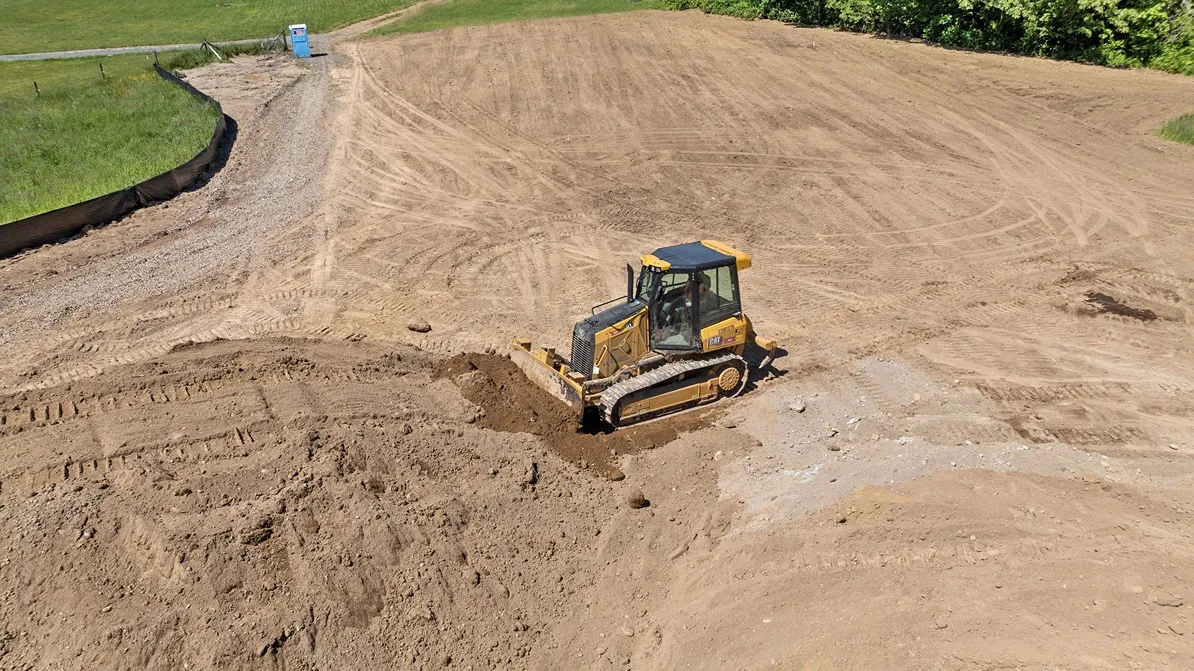

Where a job starts and stops depends on the site and the plans, but the full range of earthwork we self-perform covers the ground from raw dirt to a subgrade that carries load:
Mass and structural excavation, cut and fill, and rough grading to bring the site to plan elevation
Structural fill, compaction, and geogrid installation where the geotech report calls for it, building back ground that carries load instead of settling under it
Subgrade preparation, building pad preparation, and road base to hand off a stable footprint for the next phase
Slope grading and finish grading to bring the surface to final elevation and slope
Soil import and export managed against the earthwork quantities, since a site rarely balances on its own
We coordinate with geotechnical engineers and testing agencies to confirm imported material, compaction, and subgrade meet the project's testing requirements. Our work maps to CSI MasterFormat Division 31, the language your estimators and spec writers already work in.
Every project moves through the same core stages. Keeping them in order, and under one crew, is what keeps a job from stalling between phases. Here's how a typical earthwork project runs from first call to handover.
SEE OUR FULL PROCESS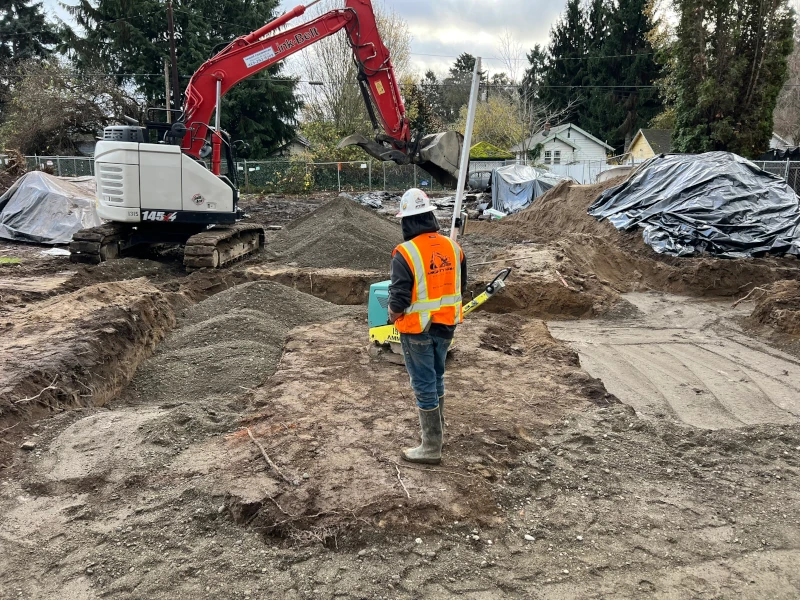
We start on the civil plans, specs, and geotech report, then coordinate directly with the GC to agree on scope, sequence, and schedule before anyone mobilizes. If the site needs a walk, we do it here.
We handle grading permits where they're in our scope and pull utility locates so crews aren't digging blind. Where stormwater compliance applies, we coordinate it with the project team from the start.
Crew and equipment move to site on the agreed schedule. From there we work through excavation, cut and fill, structural fill and compaction, and grading, staying in step with inspectors, the testing agency, and the other trades on site.
We close with finish grading, final density testing where it's required, and a walkthrough to confirm the work meets spec before we hand the site over to the GC or owner.

Excavation, structural fill, and grading all run through one crew, so the work doesn't fall through the gaps between separate operators. The same team that opens the site is the one hitting subgrade and bringing it to final grade.

Most projects are quoted fixed-price with clear line items, and the assumptions and exclusions spelled out. Because our scopes map to CSI MasterFormat Division 31, the proposal drops straight into a standard GC bid package.

You get one point of contact from bid through closeout, and field conditions get flagged early instead of after they've cost you a day. We hit the timelines we commit to, because the trades behind us are counting on it.
.webp)
Our workmanship is warranted for one year from substantial completion. We're non-union, registered in SAM.gov, and equipped to handle prevailing wage on public works when the project calls for it.
When you bring on an earthwork contractor, you're handing the whole phase to one crew. Give it to us and you get a team that runs it from first cut through finish grade, which is the setup GCs tend to come back for.
.webp)
Every earthwork scope worth trusting runs off the geotechnical report. It's the document that tells you what the soil under the site will actually do once there's weight on it, and it sets the specs the earthwork has to hit: fill in what lifts, compacted to what density, over what prepared subgrade. Skipping past it doesn't save money, it just moves the cost downstream to whoever discovers the problem.
Here's what building to the report looks like on our jobs:
Working this way is why our grading passes inspection and why the schedule behind us doesn't slip on a retest. When you bid an earthwork package to us, you're bidding it to a crew that reads the geotech report as the job, not the fine print.
Earthwork is easy to underestimate on a bid because most of it ends up buried, under the slab, under the base course, out of sight. But it's the ground every other trade builds on, and when it's off, the cost doesn't show up until it's expensive to dig back to.
The places it usually bites:
Getting this phase right the first time isn't about doing extra. It's about not paying to move the same dirt twice. That's the part of the job we take most seriously, because we're usually the first sub on site and the one setting the pace for everyone after us.
The cheapest dirt on any job is the dirt you don't have to haul. Before we bid, we look at the cut and fill quantities the plans call for and figure out whether the site balances on its own or needs material moved in or out. That number drives a real part of your cost, because import means buying and trucking fill, and export means loading out and paying to dump.
Where the site doesn't balance, here's how we handle it:
Getting the balance right is where an earthwork bid is won or lost, so we put the cut, fill, and haul numbers on the table before the work starts.
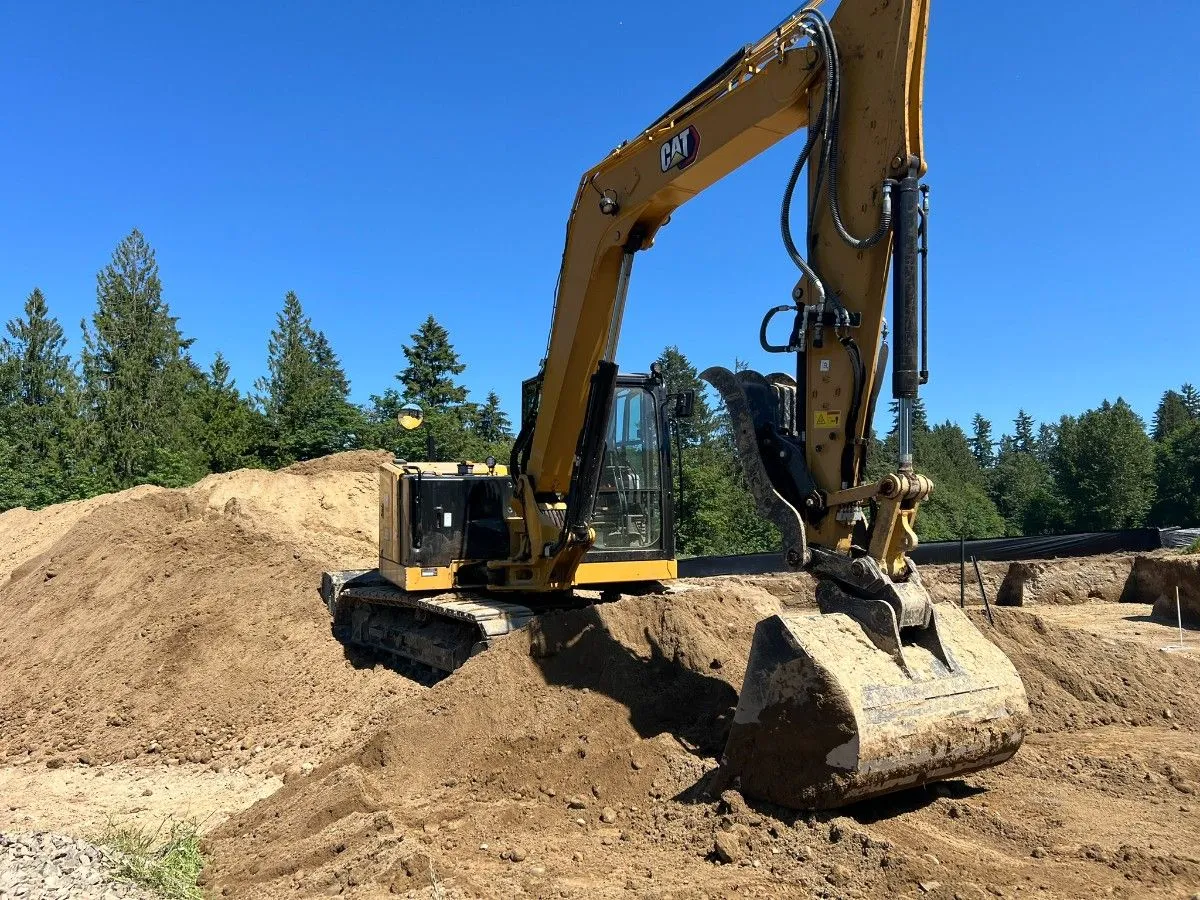
Earthwork means moving iron and moving dirt, so where a site sits matters. Mighty Arm runs crews across a 50 to 70 mile radius of Seattle, from Tacoma up to Bellingham and east to North Bend. Anywhere in that range, we can get the machines and the haul to your site.
.webp)
Seattle
Bellevue
Tacoma
Everett
Lynnwood
Bellingham
Granite Falls
North Bend

Home base & primary coverage

Yes, that's the standard way we work. Bring us the engineered grading plans and geotech recommendations, and we execute to the specified elevations, slopes, and compaction requirements so the site is ready for the next phase.
Both. We manage export of excess material and import of fill based on the earthwork quantities, and we coordinate with geotechnical engineers and testing agencies to confirm imported material and compaction meet the project's testing requirements.
When it's part of our scope, yes. We work with the GC, owner, engineers, and local jurisdiction on grading permits and stormwater requirements. Responsibilities vary by project, so we confirm who carries what during proposal.
By scope. We provide fixed-price bids with clear line items and the assumptions and exclusions spelled out, and we handle time-and-materials where the work calls for it. Send the plans and we'll return a proposal covering scope, pricing, and schedule.
It depends on site size, earthwork quantities, soil conditions, weather, and phasing. Smaller work can run several days; larger commercial and public infrastructure jobs can run weeks or months. We set the schedule with the project team and work to hold it.
Yes. We're SAM.gov registered and prevailing-wage capable, and we take on public works projects, including the added administrative requirements, that many contractors pass on.
We warrant workmanship for one year from substantial completion. Manufacturer warranties on supplied materials pass through to the owner. The warranty excludes damage caused by others, settlement beyond normal tolerances, misuse, and changes in site use.
Non-union. For most private commercial and residential development work that keeps our rates competitive, and on public works we handle prevailing wage where the project requires it.
Send us your plans and geotech report, and we'll get back to you with a proposal covering your earthwork scope, pricing, and schedule.
Tell us about the project and attach plans if you have them. We'll follow up to confirm scope, timeline, and pricing.

Commercial excavation, site prep, and demolition for general contractors and developers across Greater Seattle.
License: MIGHTAE766QK
UBI: 605-632-469


.webp)