Pipe set to grade, structures true, trench backfilled and compacted before it's ever covered. Mighty Arm is the underground utility contractor that general contractors and developers bring onto commercial sites across Greater Seattle, self-performing sewer, storm, and water while trenching the dry utilities alongside them.
The utilities under a site are the one scope nobody wants to reopen. One bad joint or a failed air test, and there's a slab or a road sitting on top of the correction. That is the pressure this phase carries, and it is why the buried work gets built to the plan the first time rather than run fast and revisited.
Mighty Arm installs to the civil drawings and the line-and-grade the design sets, holding invert elevations so the system flows and inspects the way the engineer intended. Bedding, haunching, and backfill go in to specification because the surface behind the work depends on it.

Sewer, storm, and water systems self-performed, from excavation through pipe, structures, and backfill
Set to line and grade against the civil drawings, with inverts held for flow and inspection
Trench, bedding, and compaction managed to specification so the underground supports what gets built on it
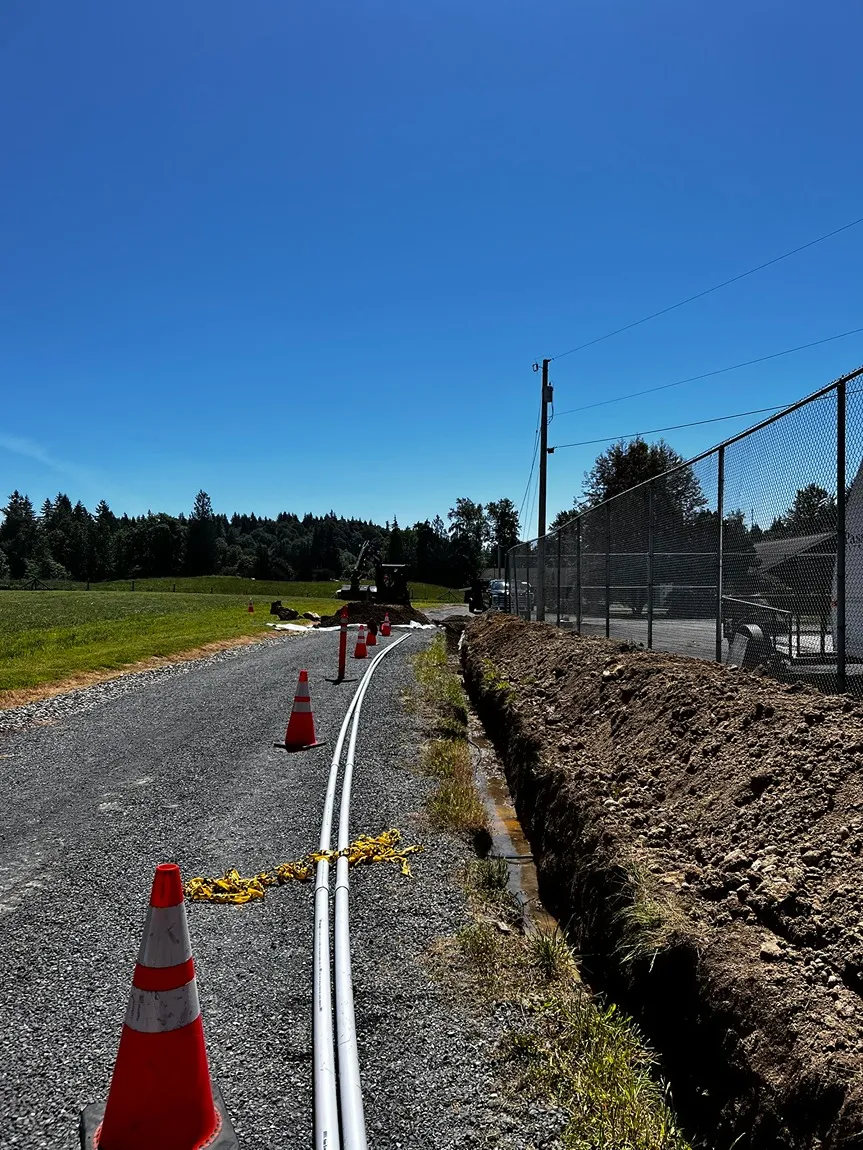
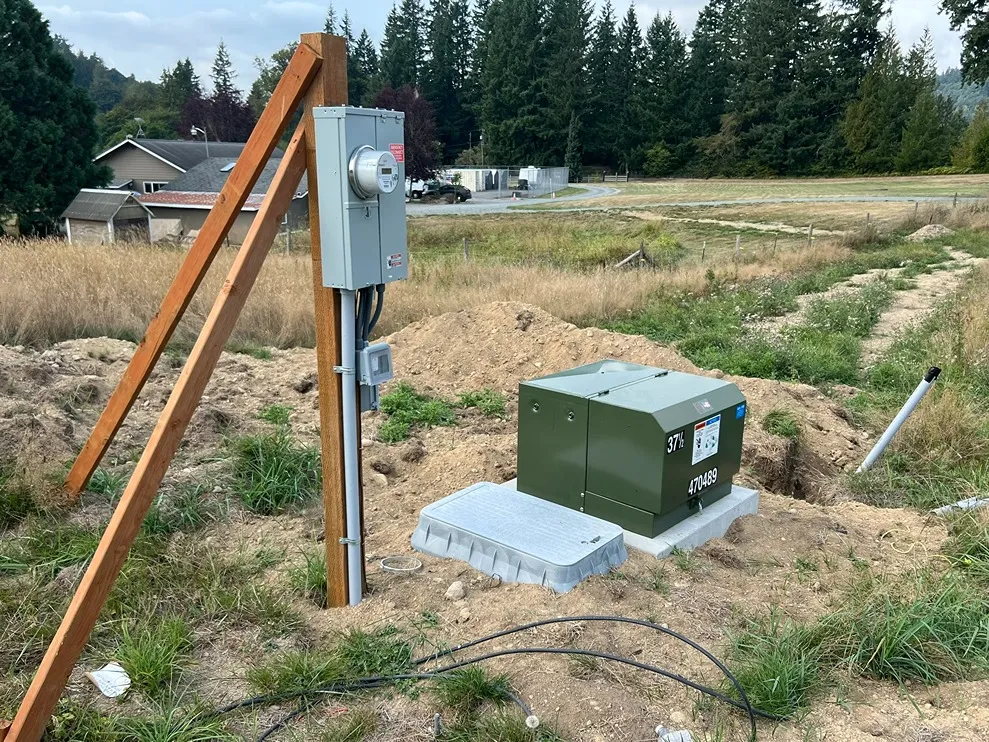
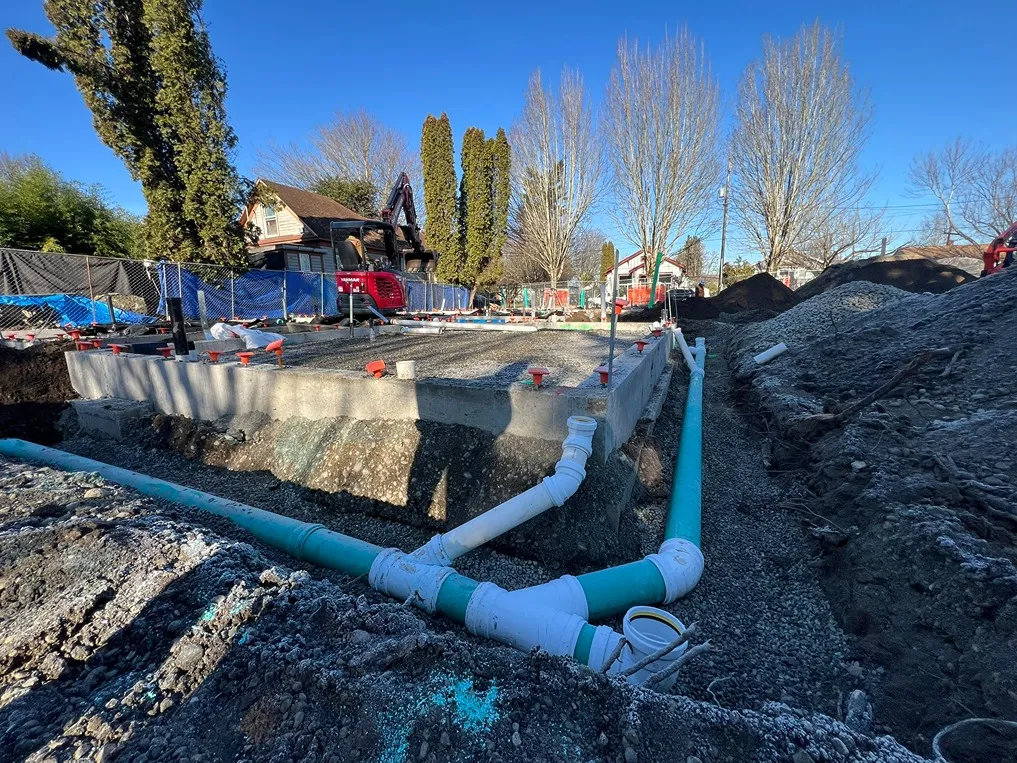
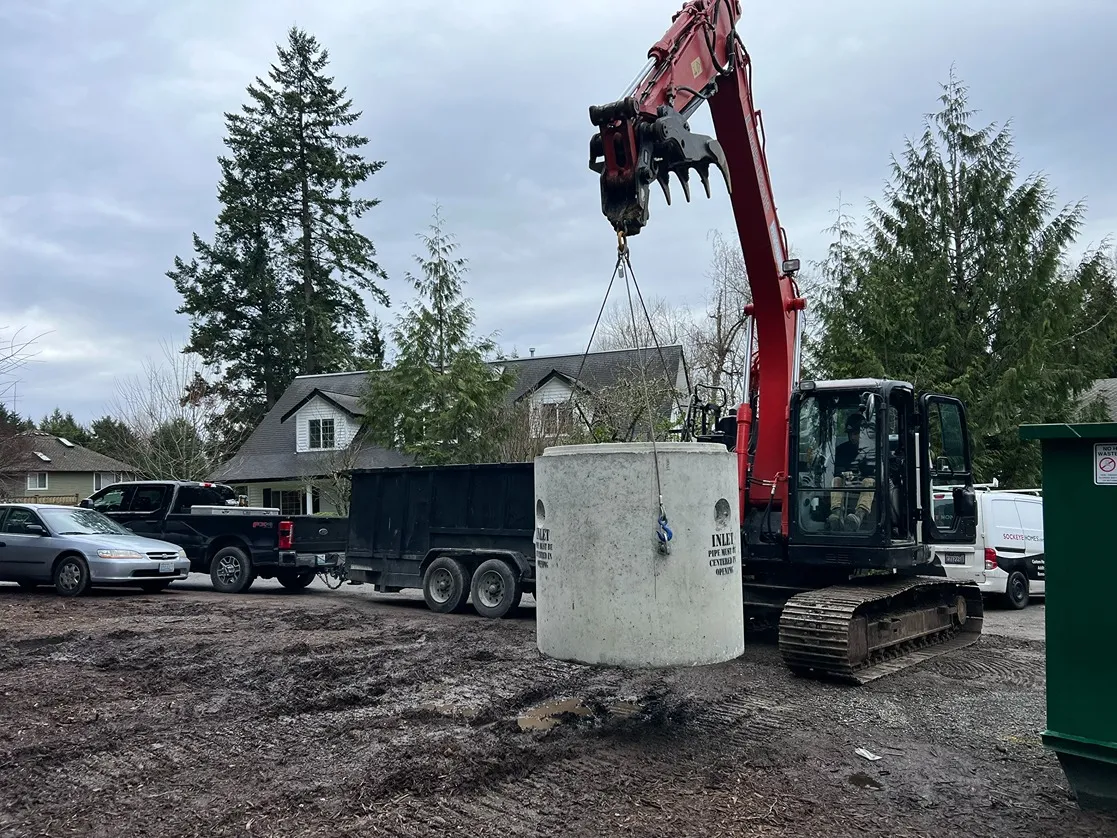
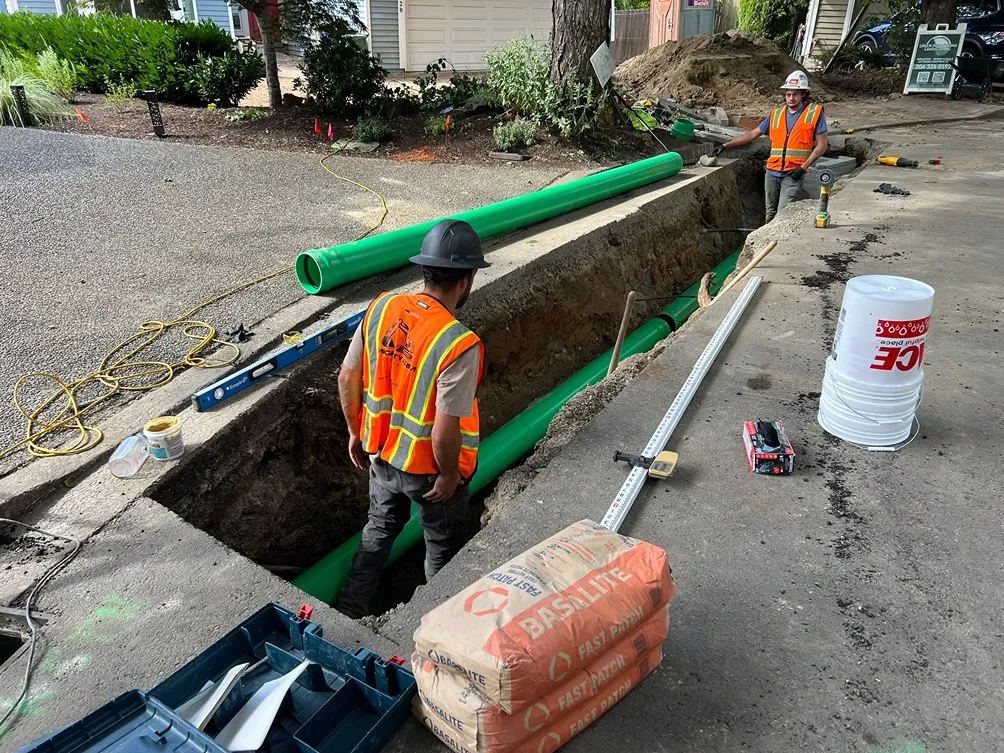
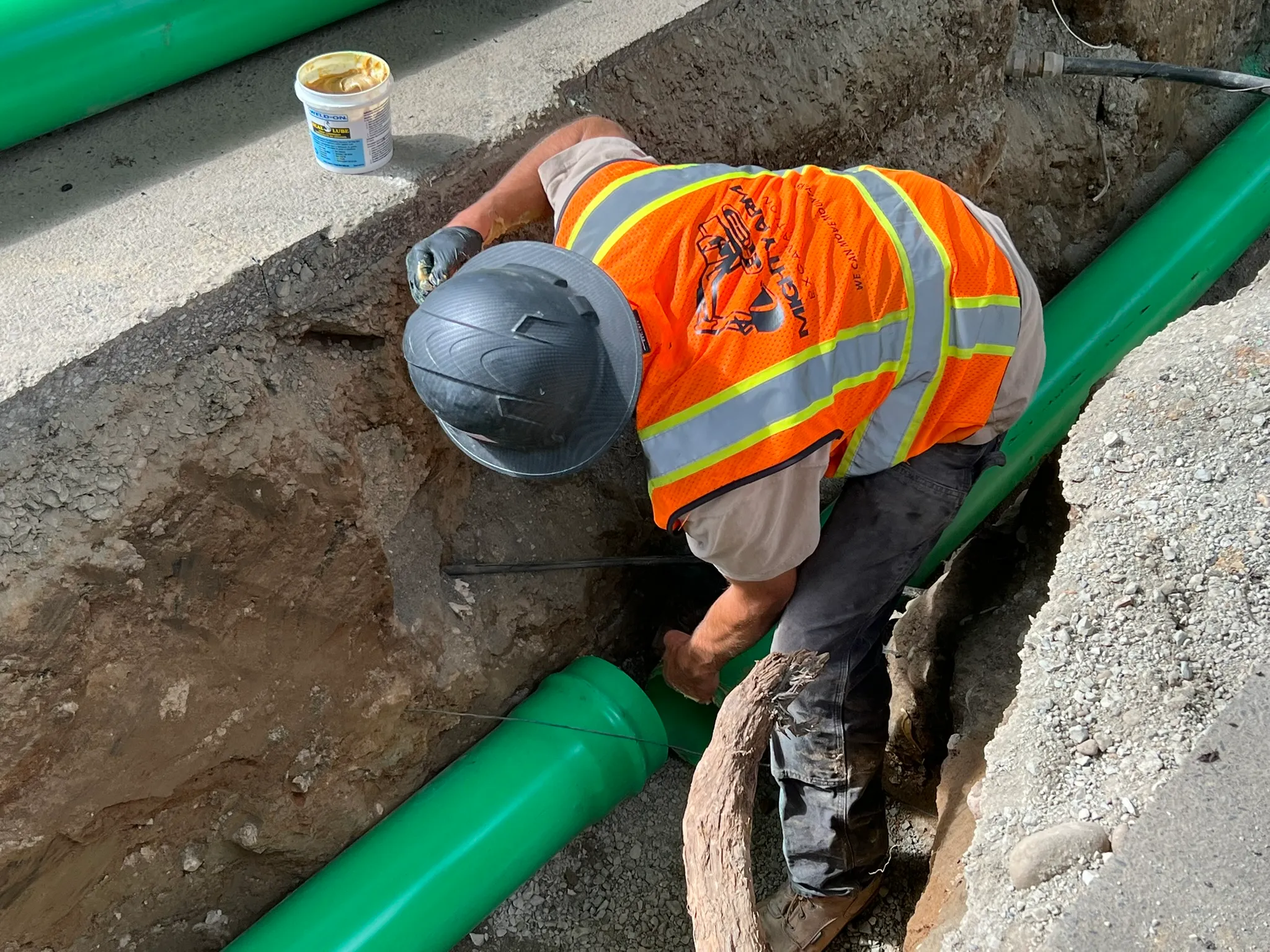
As a wet utility contractor, Mighty Arm's scope covers considerably more than pipe in a ditch. Where a job starts and stops depends on the drawings, but the work spans three wet systems plus the dry-utility trenching that shares the site. This is CSI MasterFormat Division 33 utility work, tied directly to the Division 31 earthwork on the same site, kept in the terminology estimators and specification writers use so the proposal reads cleanly in the package.
Sewer mains
Side-sewers
Sewer laterals
Sewer cleanouts
Sewer manholes
Grease traps and interceptors
Storm lines and storm mains
Footing drains, roof drains, trench drains, and area drains
Catch basins, storm manholes, storm vaults, and storm outfalls
Detention vaults, drywells, and retention ponds
Infiltration trenches and permeable pavement facilities
Sand/oil separators and storm filters
Water mains
Domestic water services
Fire service lines, including fire sprinkler leads and hydrants
Backflow assemblies
Trench, bedding, backfill, and compaction for electrical and communications
Electrical and communications conduit laid to grade
Gas trenching with sleeves set for the energy company's installation
Trench excavated and restored to specification, coordinated with the utility providers and trades sharing the site
Every site pipes differently, but the path from first walk to final connection holds to the same four stages. Reading conditions early and proving the system before it's covered is what keeps the utility scope off the schedule's critical path. Here's how a job moves.
SEE OUR FULL PROCESSWe confirm inverts, crossings, and connection points against the civil set and geotech notes before equipment mobilizes, catching conflicts on paper where they're cheap to fix.
We pull the permits within our scope and call in locates before anything opens, with shoring and dewatering set up before excavation goes deep.
The trench is opened, bedding placed, and pipe and structures set to line and grade, with inverts held against the drawings and existing lines kept clear.
Systems are air-tested or inspected as the jurisdiction requires, then backfilled in lifts, connected, and walked with the GC to confirm sign-off.
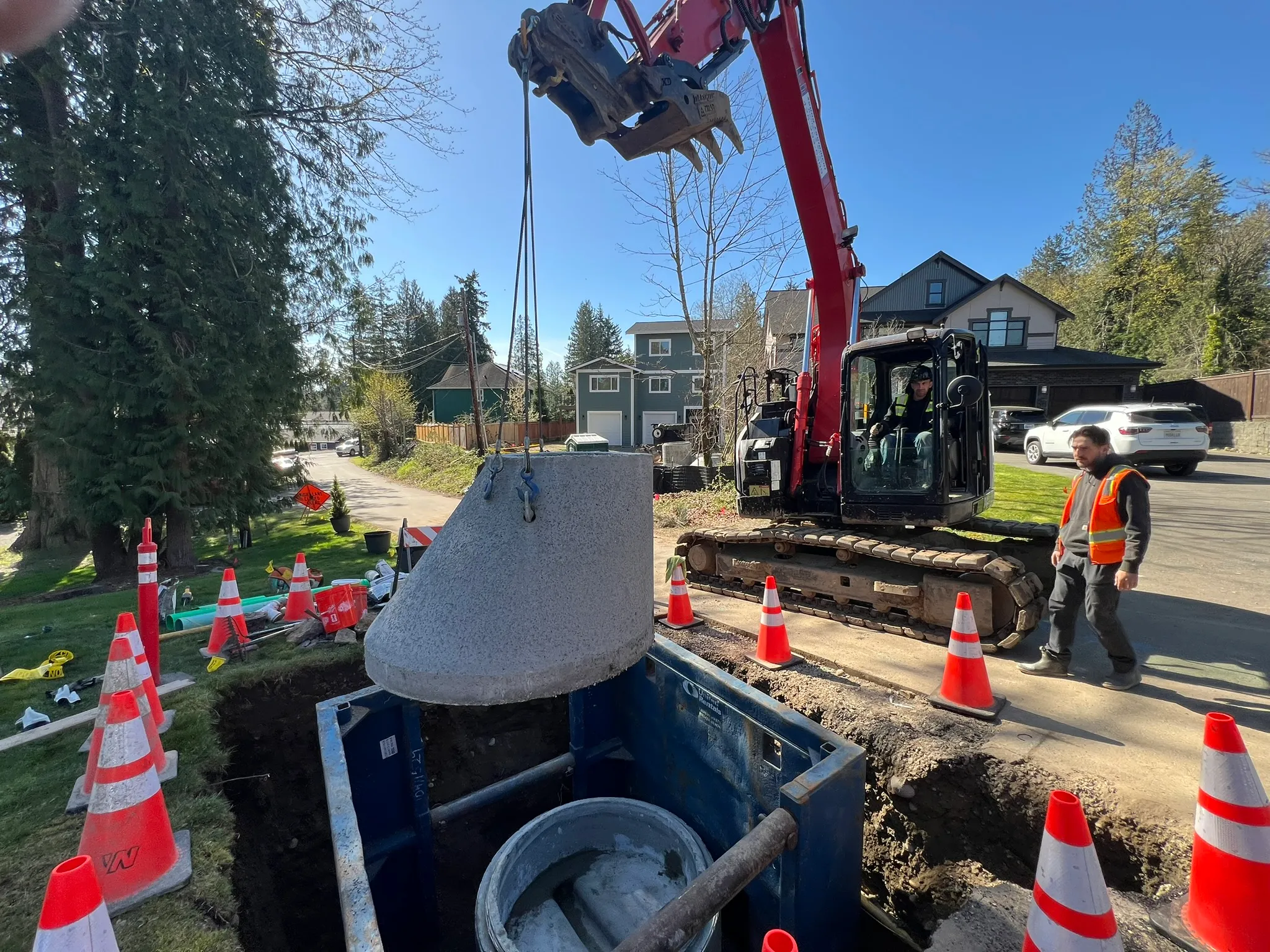
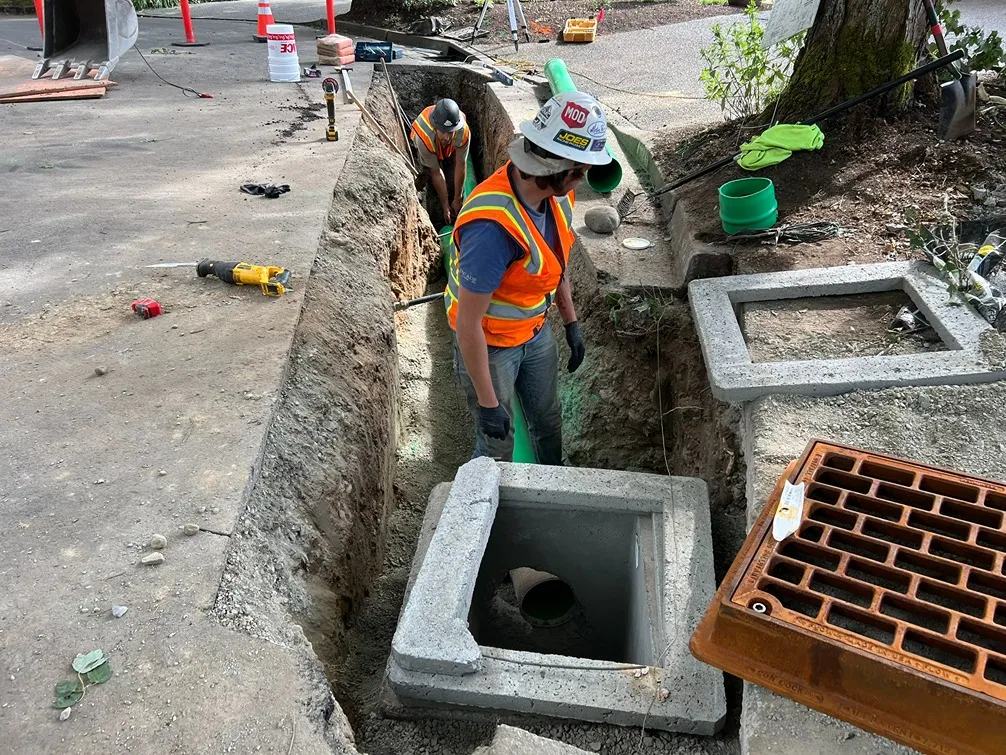
Awarding a utility scope means trusting the part of the job that disappears once it's backfilled to hold. Here is what that comes with at Mighty Arm.
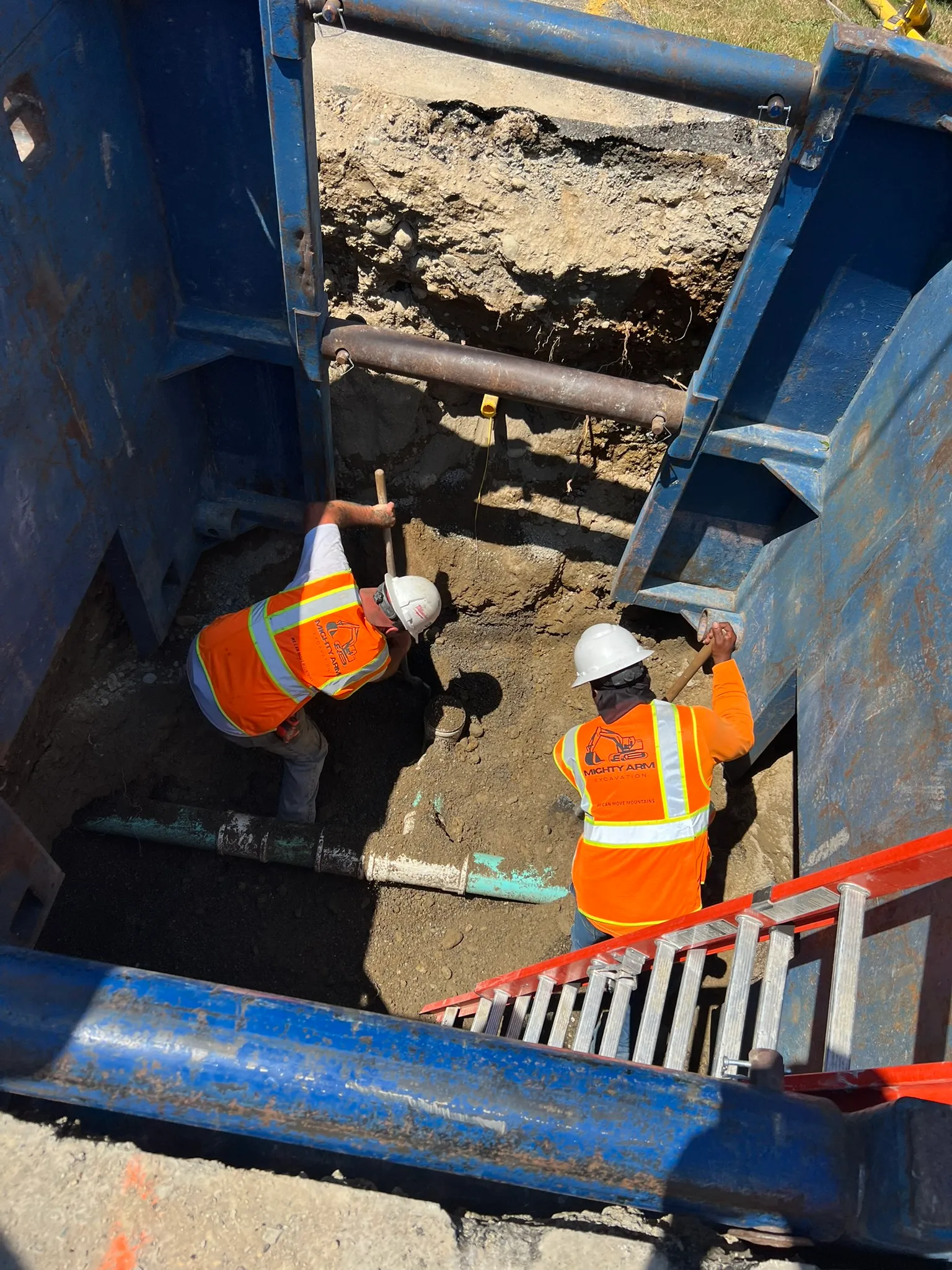

Mighty Arm self-performs CSI Division 31 and 33, so earthwork and utilities go to one subcontractor, keeping bedding, backfill, and compaction under a single scope instead of split across a seam where trench responsibility goes soft.

One point of contact from bid through closeout, so when a field condition shifts, a crossing conflict, an invert that won't make grade, you hear it while there's still room to act.

Every proposal spells out scope, assumptions, and exclusions up front, and maps to CSI Division 33 so it reads straight into a GC bid package.
.webp)
Registered in SAM.gov as a Federal contractor for USFS, USGS, and Army work, and set up for county- or city-set prevailing wage on public projects, work many contractors avoid.
A utility scope is shaped by two things that sit below the surface and cost real money when they are estimated instead of read: how deep the system runs, and what is already in the ground.
Because Mighty Arm grades the site and backfills the trench under the same scope, depth and conflicts are read before the proposal goes out, while there's still time to price them.
On nearly every new development, utilities are expected to sit within the excavation scope. The contractor moving the dirt is the contractor setting the pipe, because almost every new plat, subdivision, and commercial site needs new sewer, storm, and water, and splitting that off to a separate utility sub creates a seam where the trench, and the accountability for it, gets divided.
On a Greater Seattle development, the underground utility contractors who can also carry the earthwork are the ones who keep the whole site under one accountable scope from clearing through final connection.
Site prep looks different on a single custom home than it does on a 40-lot subdivision, and we scope each one to what it actually needs. The work spans residential and commercial development across the metro.
Typical projects we take on:
Whatever the size, the plans and the geotech report set the scope, and we bid it to match.
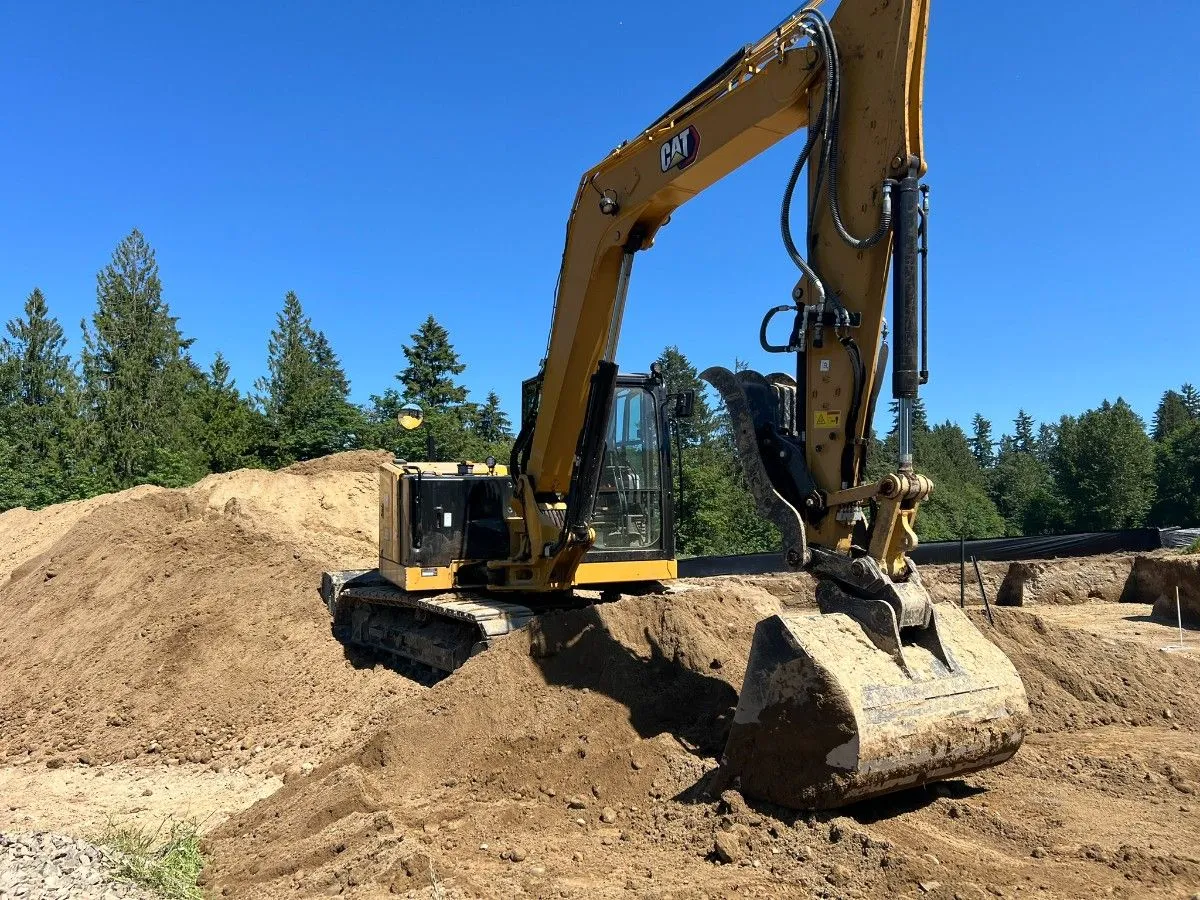
A utility job means getting equipment, pipe, and structures onto the site and spoil back off it, so location is part of the scope. Mighty Arm works across a 50 to 70 mile band around Seattle, reaching south to Tacoma, north to Bellingham, and east to North Bend.
.webp)
Seattle
Bellevue
Tacoma
Everett
Lynnwood
Bellingham
Granite Falls
North Bend

Home base & primary coverage

Sanitary sewer, storm drainage, and water and fire service systems, along with trenching for the dry utilities. That spans mains, services, and laterals through the structures that go with them: manholes, catch basins, cleanouts, vaults, and detention and treatment facilities.
Mighty Arm self-performs the underground installation, from excavation and bedding through pipe, structures, and backfill. Certified specialty work such as backflow testing is coordinated through the appropriate licensed trade, while the trench and the utility scope stay in house.
For electrical and communications, Mighty Arm trenches to depth and grade, sets the bedding, lays the conduit, and backfills and compacts the trench. Gas is handled a step differently: Mighty Arm trenches and sets the sleeves, and the energy company installs the gas line itself. The work is coordinated with the utility providers and trades sharing the site to keep it on schedule.
Running both under one subcontractor is the preferred arrangement. Carrying site preparation, earthwork, and utilities together keeps grade, bedding, and compaction consistent across the site and gives the GC a single point of accountability for everything below grade.
Mighty Arm takes the permits that fall to its scope and calls in utility locates before anything is opened. Responsibility for each permit is settled with the GC and owner during the proposal, so nothing tied to the underground work sits unassigned.
Existing lines are read off the drawings and the locates before excavation, then confirmed in the field as the trench opens. Where a new line crosses an existing one, the crossing is built to the depths and separations the code and the drawings require.
The civil plans and the utility scope. From there the proposal lays out what the work includes, along with the assumptions and exclusions behind it. Send the plans and the details, and Mighty Arm will follow up to confirm the scope.
Public projects are within scope. On this work, Mighty Arm meets the prevailing-wage requirements set by the county or city. The company is also registered in SAM.gov as a Federal contractor, which supports utility work for federal agencies. Both are lanes many contractors avoid over the administrative requirements.
Workmanship is warranted for one year from substantial completion. Manufacturer warranties on supplied materials pass through to the owner. The warranty does not cover damage caused by others, settlement beyond normal tolerances, misuse, or changes in how the site is used.
Send the plans and site details, and Mighty Arm will follow up with a proposal covering the scope, inclusions, and schedule.
Tell us about the project and attach plans if you have them. Mighty Arm will follow up to confirm the scope, inclusions, and schedule.

Commercial excavation, site prep, and demolition for general contractors and developers across Greater Seattle.
License: MIGHTAE766QK
UBI: 605-632-469


.webp)