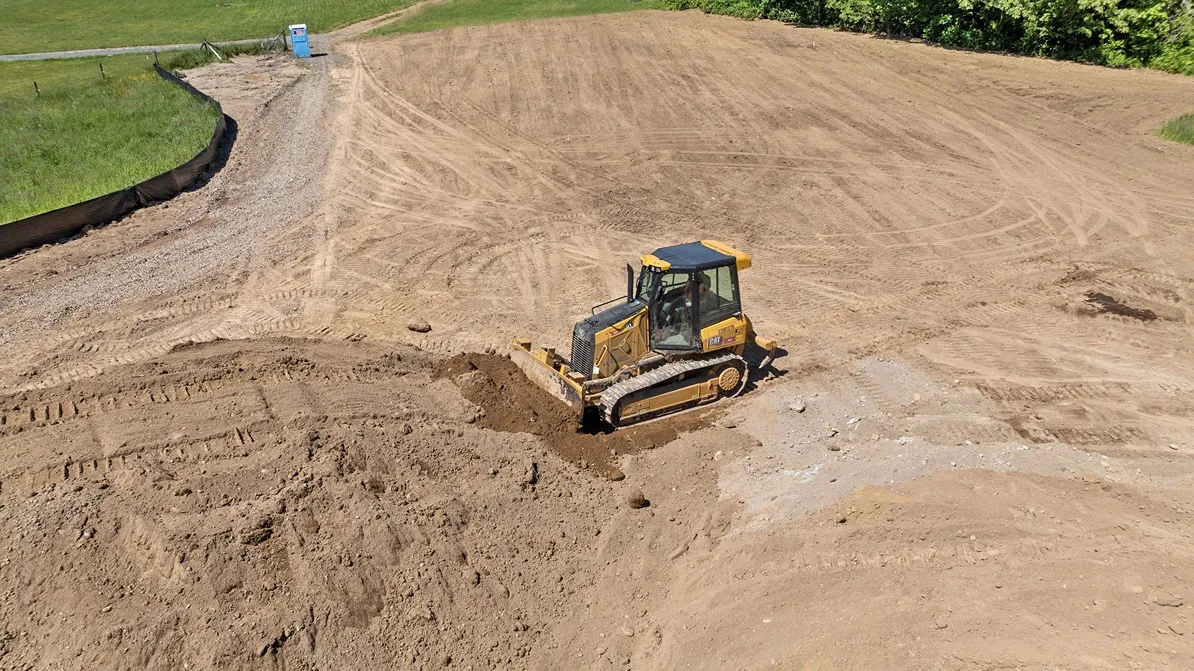
Mighty Arm Excavation handles full site preparation services for GCs and developers across the Greater Seattle area, from land clearing and demolition through wet and dry utilities, grading, and final subgrade. We get the site ready so your crews can build on schedule.
Site preparation is everything that turns raw or built-on ground into a site that's ready for foundations. Our work runs from land clearing, demolition, and TESC (temporary erosion and sediment control) through mass excavation, cut and fill, over-excavation, structural fill, compaction, and geogrid.
When the cut and fill don't balance, we handle the soil export or import to make up the difference, then finish with building pad preparation and final subgrade prep.
We don't work off a template. Every job is scoped to the site in front of us and the soil conditions the geotech report calls out, so the plan matches what's actually in the ground.
Most of our work starts before foundations and vertical construction begin. When a project needs us back for utility installations or street improvements, we've planned for it and priced it up front, so it's already on the schedule.

Prevailing-wage and public-works capable
Work backed by a one-year workmanship warranty
Scopes that map to CSI Division 31 and 33
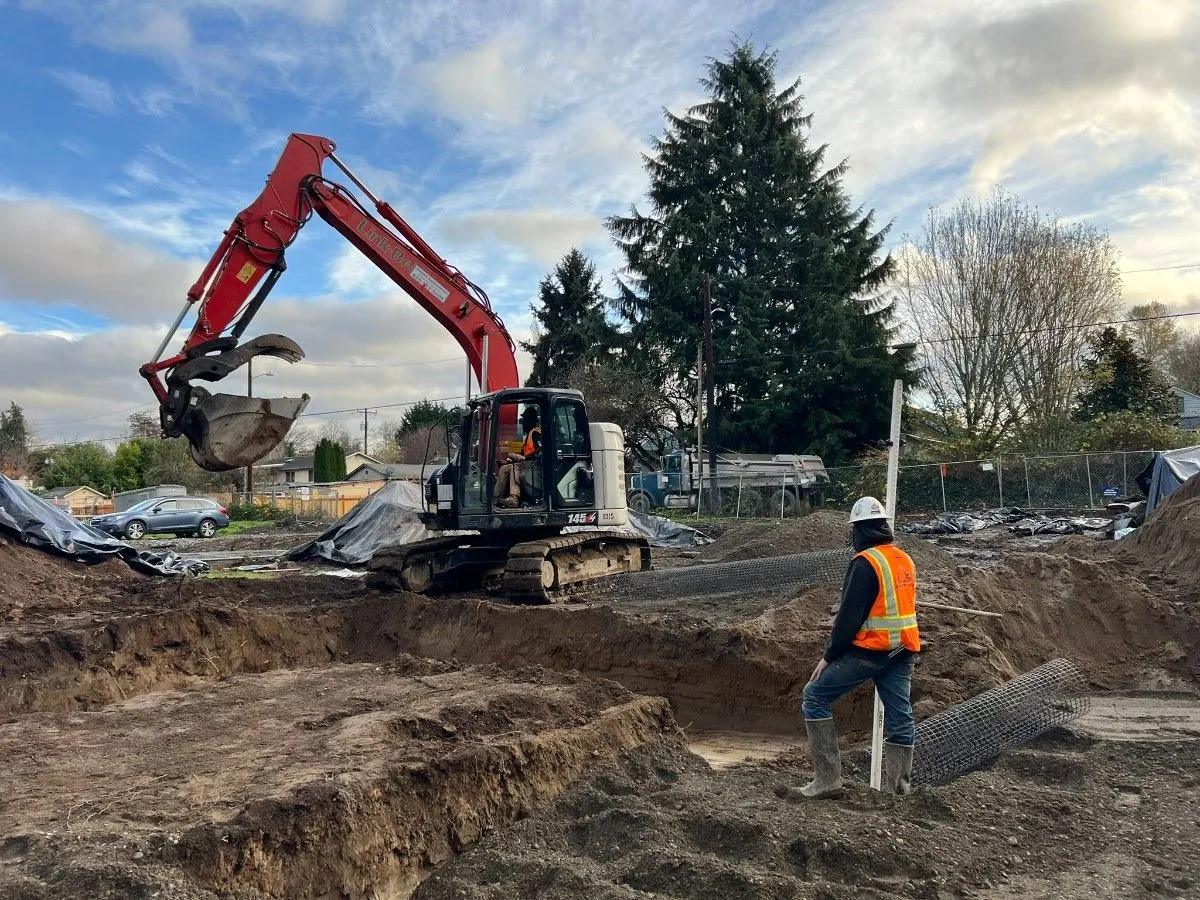
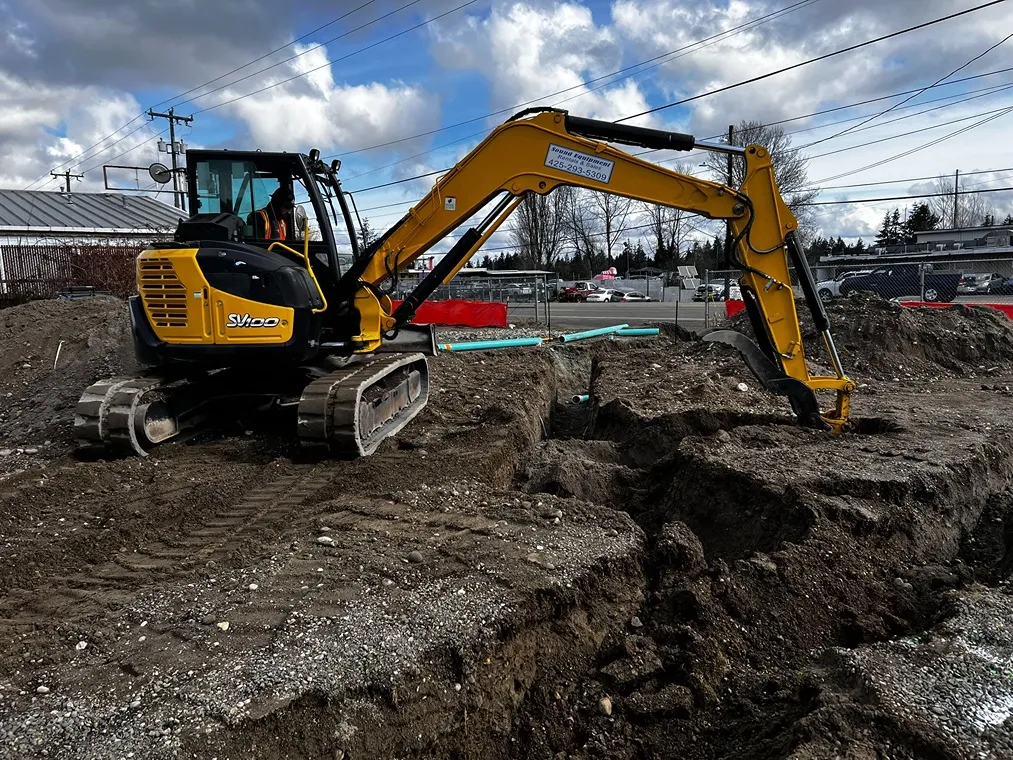
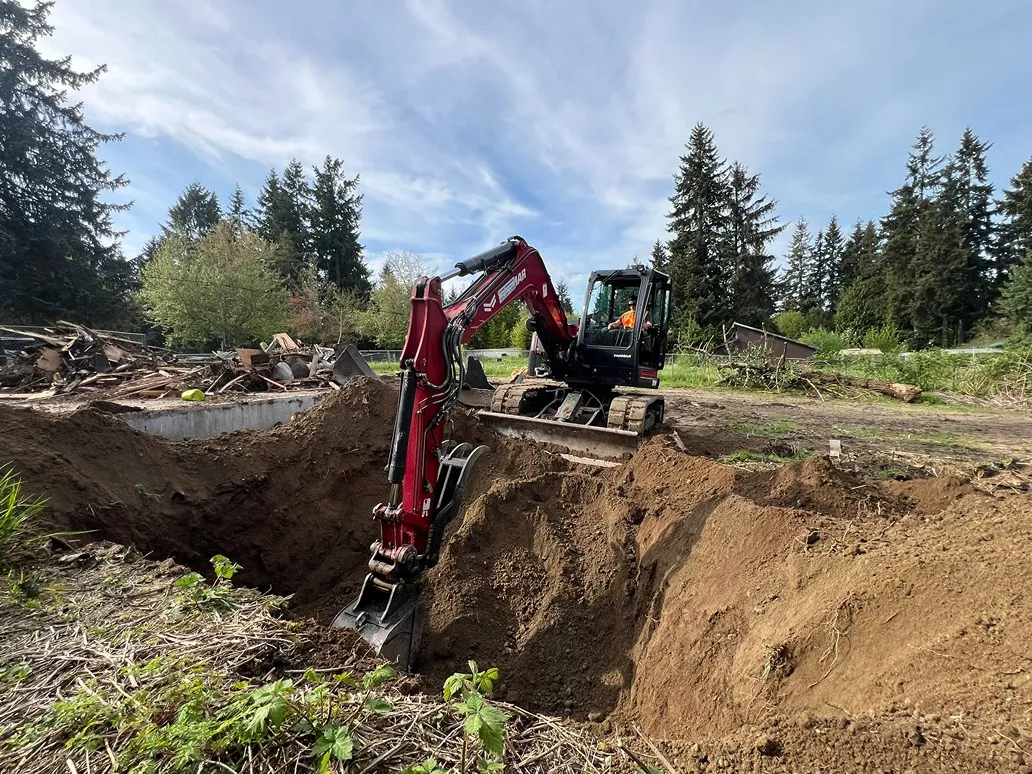
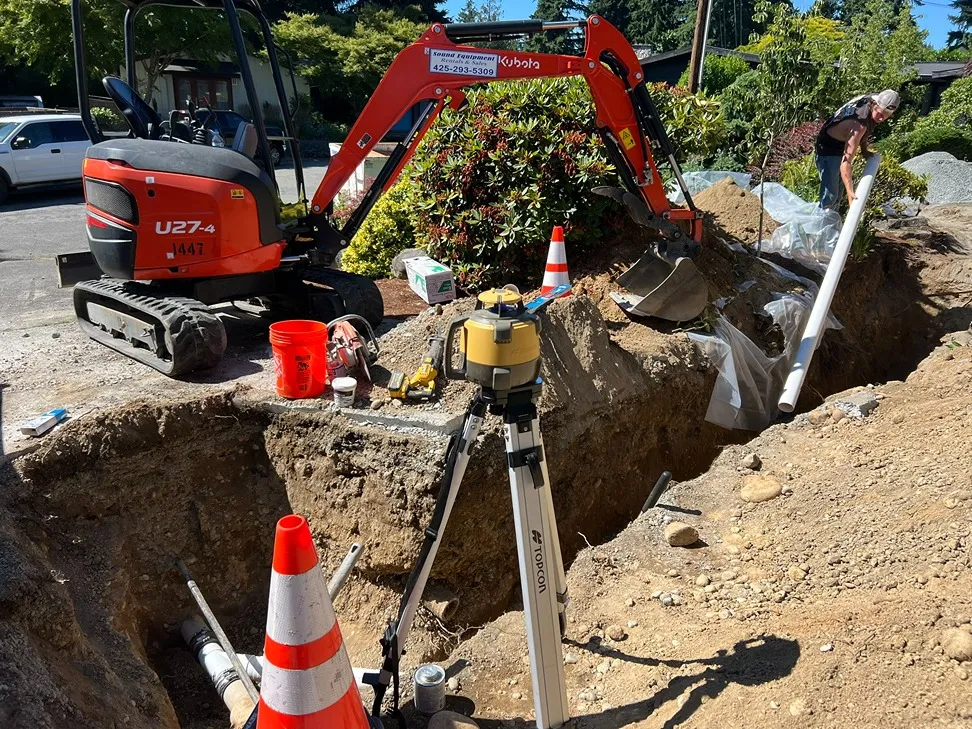
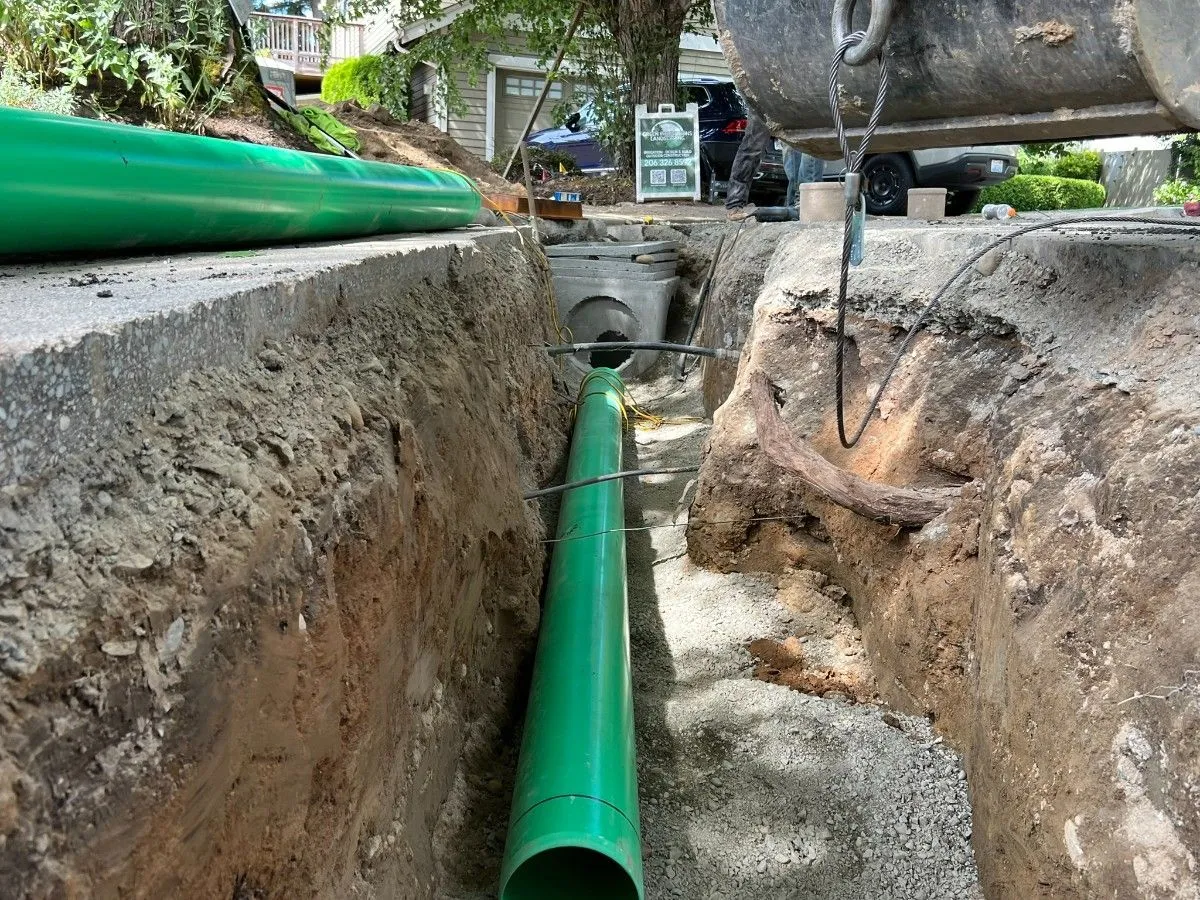
Wet utilities are one of the most technical parts of any site prep job, and one of the most common places a project loses time when it's not done right. We install complete wet utility systems, sanitary sewer, storm drainage, and domestic water, from the pipe in the ground to the structures that tie it together.
What we install:
Sanitary sewer mains and side sewers
Storm lines, catch basins, and manholes
Sewer and storm cleanouts
Roof drains and footing drains
Detention vaults, retention ponds, and infiltration trenches
Permeable pavement facilities
Grease traps and interceptors
Water mains, services, and fire lines
Trench excavation, bedding, backfill, and compaction
Testing and restoration
Accurate installation and proper elevations are critical here. We work alongside engineers, inspectors, and other trades to keep storm drainage installation and the rest of the underground work moving in step with the schedule, and our crews know local utility requirements well enough to avoid the rework that costs time on a job.
Scope ranges from a single water and sewer service tie-in on one lot to a complete underground water line installation and sewer pipe installation running hundreds to thousands of linear feet, plus the catch basins, manholes, and detention structures that go with them, for a commercial build or public infrastructure project.
Dry utility work comes down to getting the trench right the first time. We handle excavation and trenching for dry utility systems, installed to the specifications, elevations, and compaction the project and utility providers require, so the site is ready when the utility companies arrive to pull their lines.
What we install:
Electrical conduit
Communications and fiber optic conduit
Street lighting conduit
Gas line trenching
Trench excavation, bedding, backfill, and compaction
Utility crossings and gas sleeves where required
So much of dry utility work depends on timing between the utility providers and the other trades on site. Installing it accurately and to spec is what keeps a project from losing time while everyone waits on the ground to be ready.
Dry utility scope runs from a single conduit run on a residential lot to a full conduit system for a commercial or public infrastructure project, often hundreds to thousands of linear feet of trenching for electrical, communications, and street lighting.
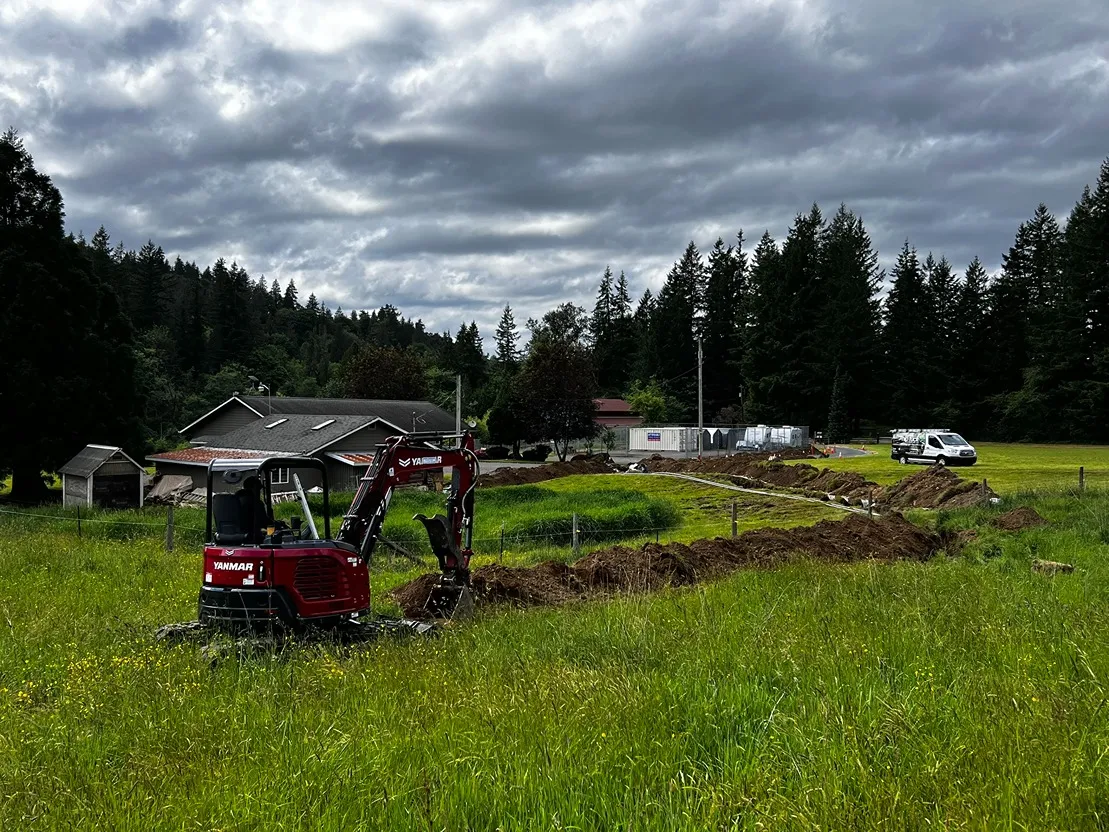
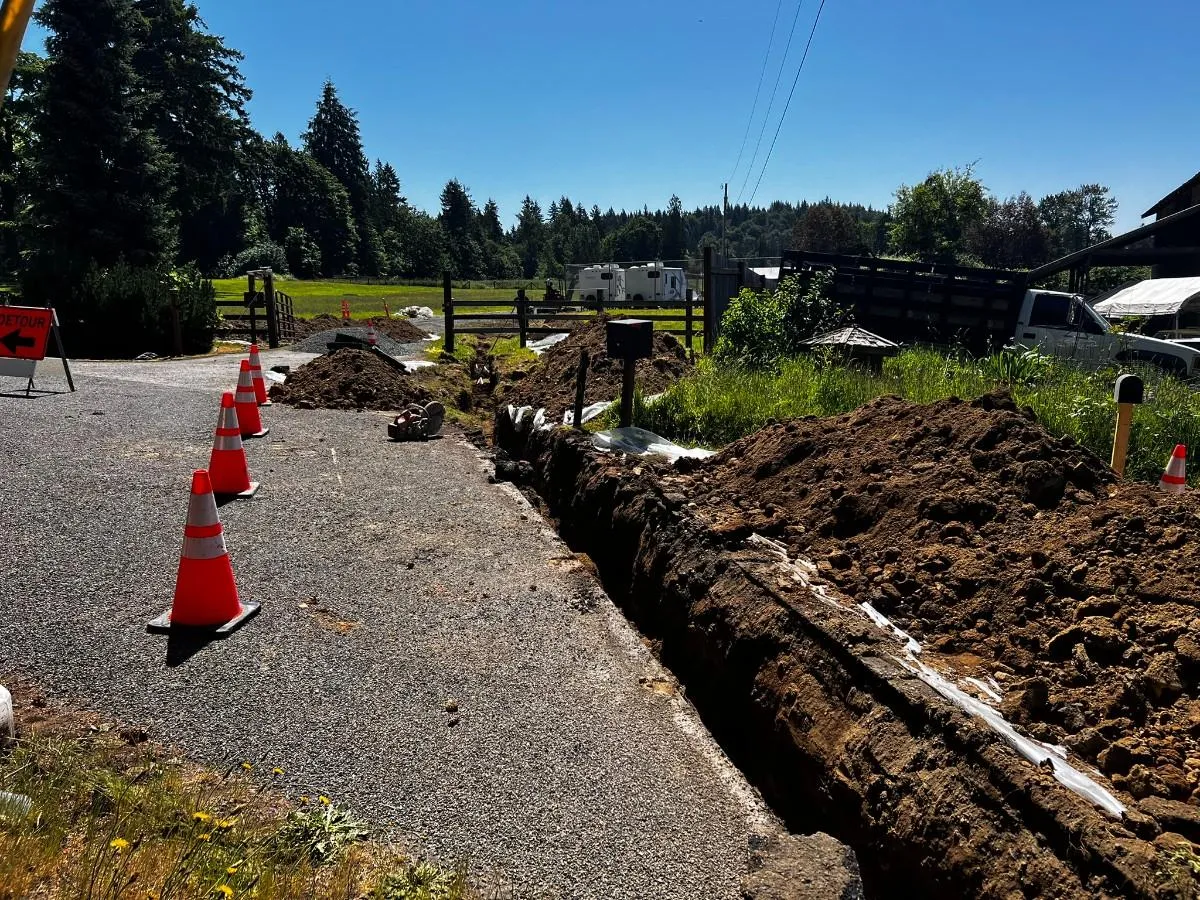
Every project moves through the same core stages. When those stages stay in order and under one crew, the job doesn't stall between phases, and a GC always knows what's coming next.
SEE OUR FULL PROCESS
We start on the plans and specs, then coordinate directly with the GC to agree on scope, sequence, and schedule before anyone mobilizes. If the site needs a walk, we do it here.
We pull the permits that apply and handle utility locates so crews aren't digging blind. TESC goes in early, since it's a line item on nearly every job and inspectors hold sites to it from day one.
Crew and equipment move to site on schedule. From there we work through earthwork, structural fill, wet and dry utility installation, and grading, staying in step with inspectors and the other trades on the job.
We finish with final grading, restoration, and project closeout, then a walkthrough to confirm the work meets spec before we hand the site over to the GC or owner.

Clearing, earthwork, and utilities run in the right order because one crew owns all of it, no waiting on a second sub to finish before the next stage starts.

Proper elevations and verified compaction mean utility and grading work clears review on the first pass, which matters here because every trade behind you is waiting on your subgrade to sign off.

Most site prep surprises live underground: unexpected soil, buried obstructions, water that doesn't drain the way the plans assumed. We scope to the geotech report up front and price the unknowns honestly, so a bad hole doesn't turn into a change-order fight mid-job.
.webp)
Fixed-price line items map to CSI Division 31 and 33 and drop straight into your bid package. And because we're SAM.gov registered and prevailing-wage capable, one crew covers private developments and public works alike.
Site prep is the phase your whole schedule is built on, so the sub you pick for it sets the tone for everything that follows.
.webp)
Site preparation is the phase that turns a piece of ground into something you can build on. It happens before any foundation goes in: the ground gets cleared, brought to grade, stabilized, and readied so the structure above it has a level, load-bearing base.
A few things worth knowing about how it fits a project:
When the ground's right, everything after it goes easier. When it's wrong, everything after it gets harder.
Site preparation is easy to underestimate on a bid because most of it ends up underground or under the slab. But it's the base every other trade builds on, and when it's off, the cost doesn't show up until it's expensive to fix.
The places it usually bites:
Getting this phase right the first time isn't about doing extra. It's about not paying for the same ground twice. That's the part of the job we take most seriously, because we're usually the first sub on site.
Site prep looks different on a single custom home than it does on a 40-lot subdivision, and we scope each one to what it actually needs. The work spans residential and commercial development across the metro.
Typical projects we take on:
Whatever the size, the plans and the geotech report set the scope, and we bid it to match.
Mighty Arm takes on site prep within a 50 to 70 mile radius of Seattle, from Tacoma in the south to Bellingham in the north and North Bend to the east. If your plat, commercial build, or public works project sits in that range, we can get a crew and equipment on the ground.
.webp)
Seattle
Bellevue
Tacoma
Everett
Lynnwood
Bellingham
Granite Falls
North Bend

Home base & primary coverage

Yes. We run the full site preparation scope in-house, from clearing and demolition through mass excavation, utility installation, grading, and final subgrade prep, so you're not managing multiple subs for one phase of the job.
We do both. Wet utilities cover sanitary sewer, storm drainage, and domestic water; dry covers trenching and conduit for electrical, communications, fiber optic, and street lighting. Having both handled by the same team keeps the underground work on a single schedule.
Usually at the very start, before foundations and vertical construction begin. We also come back once a project is underway for change orders, street improvements, and other excavation work that comes up along the way.
Yes. Temporary erosion and sediment control is a line item on nearly every estimate we write, and we build it in from the start. It keeps the site compliant and avoids the stop-work situations that catch crews who leave it until later.
It depends on site size, scope, permitting, weather, and utility work. Smaller jobs can run a few days; larger commercial and public infrastructure projects can take several weeks to a few months. We plan the work around your build calendar so it lands when you need it.
Most projects are quoted as a fixed price built from your plans, specs, and site documents. The more complete those are during estimating, the more precise the number, which is why we ask for full project documentation up front. Every proposal spells out exactly what's included, assumed, and excluded before construction starts, so the price you approve is the price you plan around.
We handle the permits that apply, run the 811 utility locates, and work directly with inspectors so utility and grading work passes review without holding up the build.
Yes. On public projects, we pay the prevailing wage set by the city or county, and we're set up to handle the added reporting that comes with it, which is why a lot of contractors pass on this work. We're also registered as a federal contractor in SAM.gov, so we can take on projects for the USGS, the U.S. Forest Service, the Army, and other federal agencies.
Send us your plans and site details, and we'll get back to you with a proposal covering your site preparation scope, pricing, and schedule.
Fill out the form below and we'll follow up within one business day.

Commercial excavation, site prep, and demolition for general contractors and developers across Greater Seattle.
License: MIGHTAE766QK
UBI: 605-632-469


.webp)