Mighty Arm Excavation is a licensed, bonded and insured electrical trenching contractor for Greater Seattle GCs and electrical contractors, working within our underground utility scope. We dig, bed, backfill and restore to the power company's design, and the electrician and the power company handle the electrical work.
Request a BidMighty Arm Excavation digs the trench and sets the structures that carry power, then beds, backfills and restores them to the approved design. The electrical work itself stays with the electrician and the power company.
Our electrical trenching covers primary runs for the power company and secondary or building service runs. We excavate to depth and grade, place sand or select bedding, and backfill to the conduit layout on the approved plans. Where the design calls for it, we use CDF (controlled density fill, a flowable fill) in place of standard backfill.
Transformer pads and vaults, handholes and concrete-encased duct banks go in the same scope when the design calls for them. We trench, bed and backfill for PVC Schedule 40, PVC Schedule 80 and HDPE (high-density polyethylene) duct runs.
Conduit trenching sits inside our trench excavation work, with crews cross-trained with our earthwork crew. Each run is backfilled only after the required inspection.

Built to the serving power company's design and construction standards
Power company or inspector review before encasement or backfill
CSI scope categories: 33 70 00 Electrical Utilities and 31 23 33 Trenching and Backfilling


Mighty Arm Excavation's electrical scope covers six kinds of trench and structure work, each sized to the power company's design and the project's electrical plans.
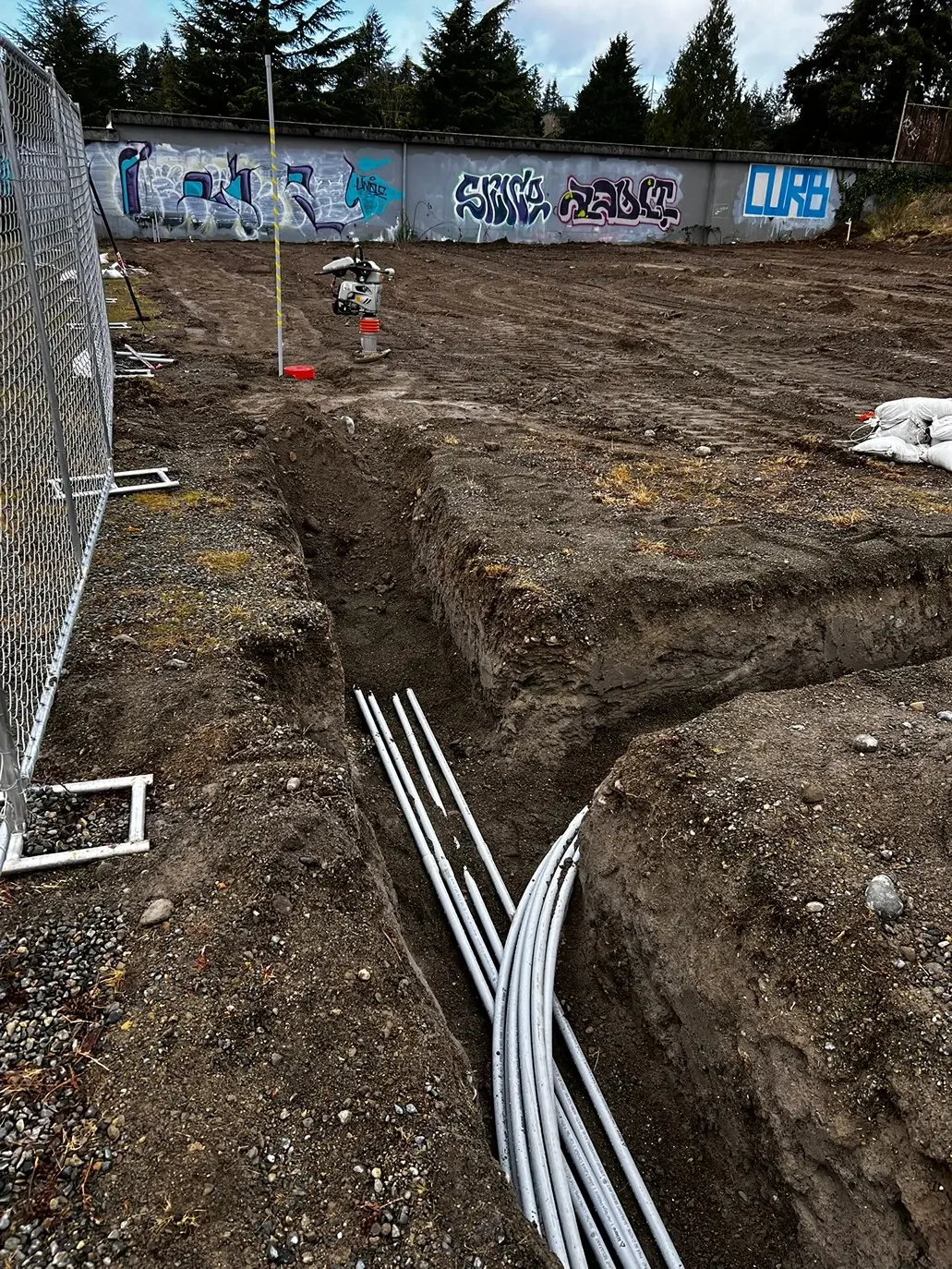
We trench for primary conduit, which carries the power company's line to the transformer. We also trench for secondary conduit, which carries service from the transformer to the building.

We excavate for transformer pads and vaults and set each structure to the design. Crane service for vault setting is brought in as needed.

We set handholes, pull boxes and junction boxes to grade. A handhole is a small buried box that gives access to pull or splice cable.

We trench for duct banks and place the concrete encasement. A duct bank is a group of conduits encased together in concrete to protect the cables inside.

We trench for street lighting conduit and pole bases in the right-of-way, and for site lighting conduit as part of site preparation on private sites.

We trench, bed and backfill EV charger conduit runs and restore the surface where a run crosses paving.
Mighty Arm Excavation carries the trench from design review to restored surface. The work is built to the power company's standards and inspected before it is covered.
Track Record
Projects delivered company-wide across Greater Seattle, private and public.

We build to the power company's design and construction standards from the first cut, rather than correcting the work after an inspection.
Sewer, storm and water can run under the same contract as the power trench, so one sub holds the trench and the backfill.

We request power company inspections ahead and keep the trench open until the required inspection is complete.

Our workmanship is warranted for one year from substantial completion, with stated exclusions.
Electrical trenching runs in four stages: design review, trench and structures, inspection, then backfill and restoration.
SEE OUR FULL PROCESS
We review the power company design and the electrical plans, then call 811 and pothole existing lines. Washington requires the 811 locate notice at least two full business days before excavation. Before digging, we put a trench safety plan in place, assign a competent person for trench safety and set clearances around existing energized lines. Traffic control is set up for right-of-way work.
The trench goes to the depth and grade on the design, with bedding placed to the conduit layout. Vaults, pads and handholes are set, and duct banks are encased in concrete where required.
The power company or its inspector reviews the trench before encasement or backfill. Snohomish County PUD, for example, must inspect and approve conduit installations before backfilling. We request inspections ahead and plan the work around inspector availability.
Backfill is placed and compacted in lifts, with warning tape above the run. Tracer wire, a locatable wire laid with the run, goes in where the design calls for it. We restore the surface, and when as-builts are in scope, the GC gets marked-up drawings of the locations and depths of our work. Some concrete or asphalt restoration and traffic control are subcontracted as needed.
The real test of a sub is whether a GC calls you for the next job. Here's what the contractors and developers we work with have to say.

From 220+ Google reviews
Mighty Arm Excavation has trenched to the designs of Puget Sound Energy, Seattle City Light, Snohomish County PUD and Tacoma Power. From offices in Bellevue, Seattle and Granite Falls, we work from Tacoma north to Bellingham and east to North Bend, including Bellevue and Snohomish County.
The work runs from single-home service trenching to plats, condos and townhomes, private commercial sites, public works street lighting, federal projects and right-of-way work. Past projects with electrical trenching include a Monroe custom home site and a Seattle tiny house village.


Home base & primary coverage
Mighty Arm Excavation's scope is the civil work: excavation, trenching, bedding, backfill, compaction, surface restoration and concrete encasement where required. Electricians pull wire and make connections, and the power company handles its own equipment and energization.
The exact split depends on the project and the utility, and the proposal states it before work starts.
Mighty Arm Excavation builds electrical trench to the design and construction standards of the power company serving the site. Each utility publishes its own requirements, and they differ on details such as trench, bedding and inspection steps.
Seattle City Light, for example, keeps construction standards for customer trenching in the right-of-way and for primary conduit and duct bank installation. We review the power company design and the electrical plans against those standards before the first cut.
A joint trench is one trench that carries more than one utility, typically power, communications and gas. Gas can share it when the utilities' standards and the approved plans allow, and each trade installs its own line.
Tacoma Power, for example, publishes a residential joint utility trench standard.
On a joint trench, Mighty Arm excavates, beds and backfills at the required depths and separations. The layout and sequence are coordinated with the electrician and the utility providers on the approved plans. The energy company or its contractor installs the gas line, and backfill follows the required inspections.
Common reasons are insufficient cover, wrong separation from other utilities and poor bedding. Trench is also rejected when the work doesn't match the approved plans or utility requirements, or when backfill goes in before inspection. PSE's red-tag list covers related problems, including trench not dug out, unacceptable conduit and no permit or inspection.
Those are the points to confirm before calling for inspection.
When a run conflicts with a wet utility or hits an unmarked line, we stop in that area and protect the existing line. We notify the GC and the utility, and change alignment or depth only after an approved fix.
Mighty Arm Excavation does the civil work for power, not the electrical work. Three things sit outside our scope:
Mighty Arm prices electrical trenching per project from the power company design and the electrical plans, and doesn't publish rates. The number depends on the run and the structures in it.
Mighty Arm Excavation is a Washington-licensed contractor, bonded and insured, with these details for prequalification:
Answers to what GCs and electrical contractors most often ask before bringing us onto a power scope.

Mighty Arm excavates, beds and backfills joint trench for power, communications and gas at the depths and separations on the approved plans. Each trade installs its own utility, and the energy company or its contractor installs the gas line. Backfill follows the required inspections.
Yes. Mighty Arm works to the design and construction standards of the power company serving the site. It has worked with Puget Sound Energy, Seattle City Light, Snohomish County PUD and Tacoma Power. On a City Light new service, the trench is built to City Light's published standards and inspection steps.
Yes. Mighty Arm excavates for transformer pads and vaults and sets them to the power company's design, bringing in crane service for vault setting as needed. The power company handles its own equipment and energization.
Bring Mighty Arm in at project start. Power company designs can take a while depending on the jurisdiction, so early review lets the trench scope be priced and sequenced against the design.
PSE makes the customer side responsible for having the trench ready. Its construction FAQ lists what must be ready, including trenches and work pits free of debris and water and debris-free sand backfill on hand. It also requires the proper size and type of conduit installed, and PSE red-tags a service when the trench isn't dug out. Mighty Arm can carry that trench for the GC or electrical contractor.
Mighty Arm doesn't publish per-foot rates, because the price depends on the run. It prices per linear foot, per structure, lump sum, time and materials or on a unit price schedule. Trench length and depth, number of conduits, structures, encasement, joint trench requirements and right-of-way restoration all move the number.
Depth is set by the serving power company's standard and the approved design, and it varies by utility and by primary or secondary service. Mighty Arm trenches to the depth and grade on the design, and cover is checked at inspection before backfill.
They can, in a joint trench built to the utilities' standards and the approved plans. Required separations come from those standards, and each trade installs its own line. Mighty Arm trenches, beds and backfills only.
Send the power company design, the electrical plans and your schedule. We'll come back with the trench and structures priced, and the assumptions and exclusions written into the proposal.
Give us the basics and a quick description of the scope. We'll take it from there.

Commercial excavation, site prep, and demolition for general contractors and developers across Greater Seattle.
License: MIGHTAE766QK
UBI: 605-632-469
NAICS: 238910 – Site Preparation Contractors